Who Is Doña Rosa?
When I began creating Mateo, I knew he couldn't exist by himself.
He needed a family.
He needed a home.
And somewhere in that home, I knew there needed to be a grandmother.
Her name became Doña Rosa.
At first, that was all she was meant to be.
Mateo's grandmother.
But characters don't always remain what you intended them to be.
Doña Rosa certainly didn't.
As Mateo and the Secrets of the Eternal Word began to take shape, I realized there was something different about her.
She knew things.
Or perhaps it would be more accurate to say—
she seemed to know things.
She Wasn't Surprised
Imagine being twelve years old and trying to explain that an ancient Bible hidden inside an abandoned mountain church had somehow carried you thousands of years into the past.
That you had seen the Garden of Eden.
That you had watched Noah build the ark.
That you had stood among the people of Babel.
Most grandmothers might have a few questions.
Doña Rosa does too.
But there is something unusual about hers.
She isn't shocked.
She doesn't dismiss Mateo's stories as dreams or a child's imagination.
Instead, she listens.
Carefully.
Sometimes she asks a question that helps Mateo understand something he hadn't understood himself.
And sometimes—
she says almost nothing at all.
That silence began to intrigue me.
Because eventually I found myself asking the same question I hope readers ask:
What does Doña Rosa know?
Was Mateo Really Chosen by Accident?
Mateo discovers the Verbum Aeternum in an abandoned church in the mountains of Miraflor.
At first, it appears that he simply stumbled upon something extraordinary.
But did he?
As the story develops, there are hints that Mateo's connection to the ancient Bible may not be an accident.
And somehow, Doña Rosa seems connected to that mystery.
She never sits Mateo down and explains everything.
She never says, I know why this is happening to you.
That would be much too easy.
Instead, she guides him.
She helps him think about what he has witnessed.
She seems to understand that Mateo isn't being sent into the past merely to see biblical history.
He is being sent there to learn from it.
And every once in a while, Doña Rosa says or does something that raises another question.
Does she know why Mateo was chosen?
Perhaps.
But if she does, she isn't telling him.
Not yet.
Finding Doña Rosa
Just as I had to discover what Mateo looked like, I had to discover Doña Rosa.
I knew she should look Nicaraguan.
But I wanted something else in her face.
Warmth, certainly.
Strength.
Wisdom.
But also something difficult to define.
The expression of someone who might know a secret—
and has decided that you aren't quite ready to hear it.
I went through different versions until eventually I looked at one and thought:
There she is.
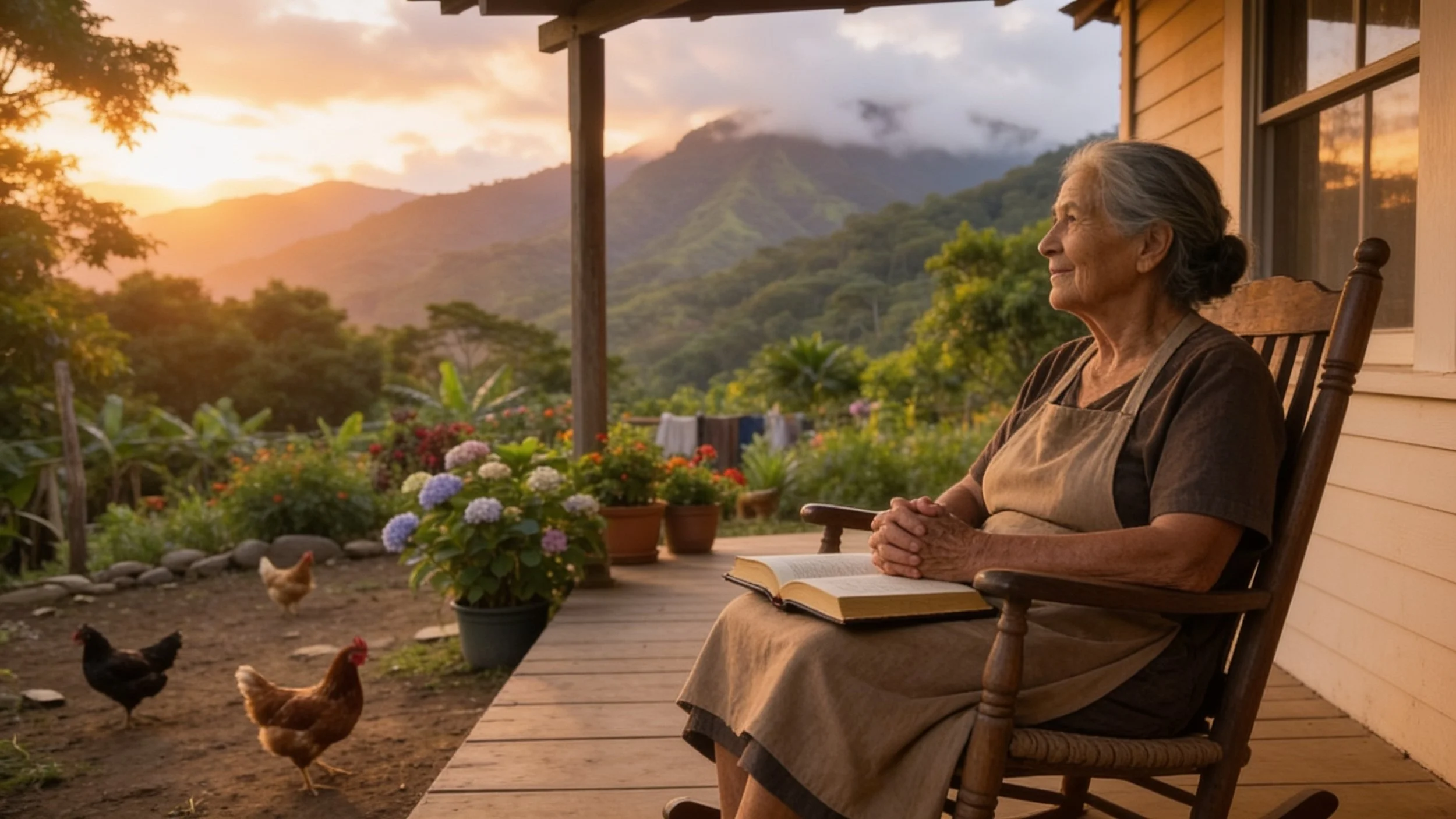
Doña Rosa on the porch in Miraflor—watching, listening, and perhaps knowing more than she says.
Doña Rosa.
Doña Rosa watches over Mateo with the quiet wisdom of someone who may understand far more than she reveals.
The Person Mateo Comes Home To
Mateo's journeys take him into some of the greatest stories ever told.
Creation.
The Flood.
Babel.
And now, as his journey continues, Abraham.
But eventually Mateo always comes home.
Back to Nicaragua.
Back to Miraflor.
Back to Doña Rosa.
And that may be more important than it first appears.
Because Doña Rosa doesn't simply comfort Mateo after his journeys.
She helps him understand why they matter.
She listens to what he saw.
She notices what he missed.
She occasionally nudges him toward questions he hasn't thought to ask.
And all the while, one larger question remains unanswered.
Mateo may be traveling through the Verbum Aeternum.
But Doña Rosa seems to know something about the journey that Mateo doesn't.
Perhaps even something about why it is Mateo making the journey in the first place.
For now, she isn't telling.
And I think we'll let her keep her secret a little longer.
I Had Become an Author
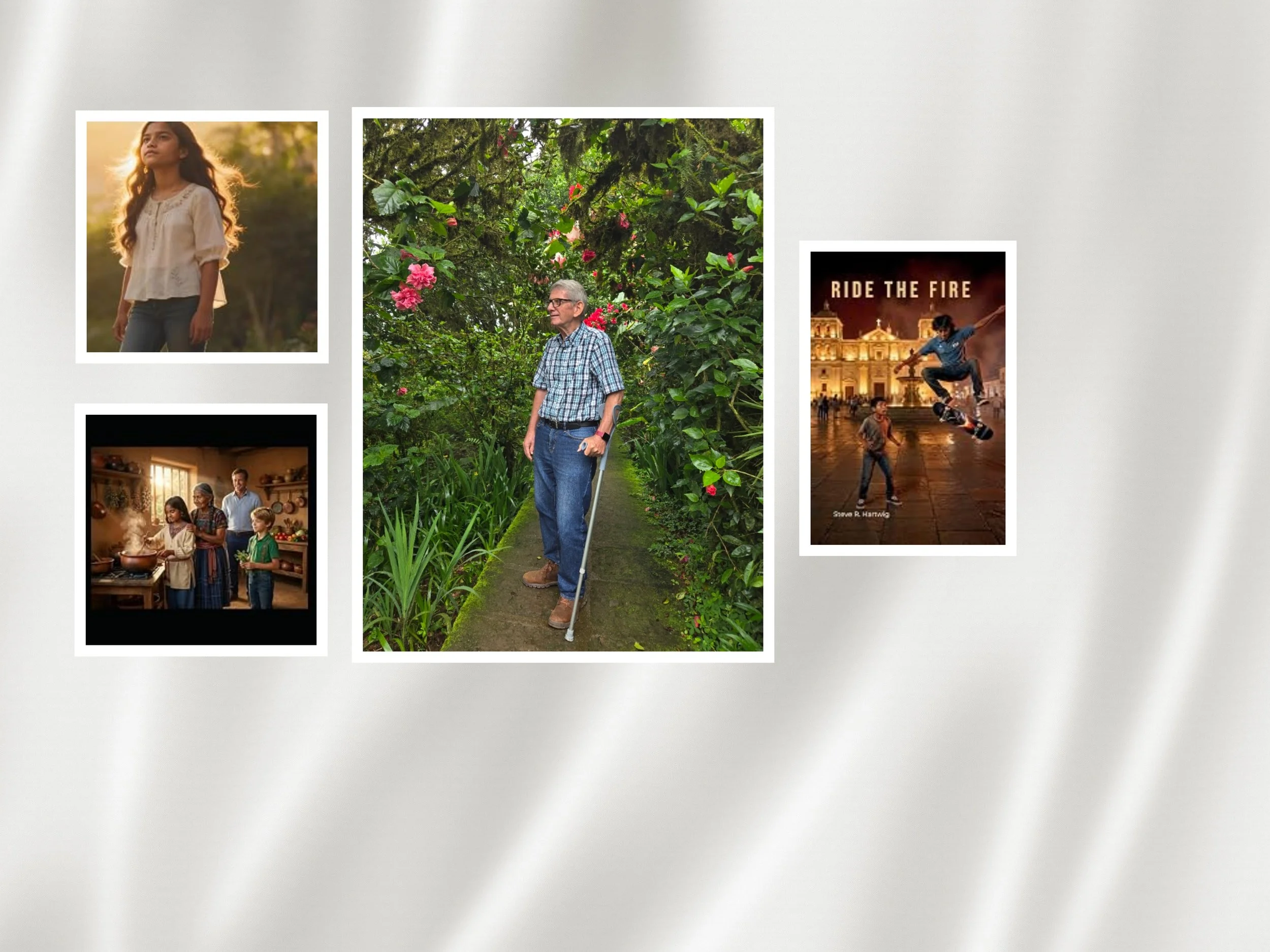
Books and moments from Steve R. Hartwig’s unexpected journey from writing his first story to becoming an author in Nicaragua.
And let the beauty of the LORD our God be upon us: and establish thou the work of our hands upon us; yea, the work of our hands establish thou it. — Psalm 90:17 (KJV)
For a long time, I thought of writing as something that had simply happened to me.
It certainly wasn't planned.
Brandy didn't give me an idea for a book.
She caused me to break my leg.
And somehow, from the weeks that followed, The Little Chef was born.
At first, that was enough.
I had written a book.
Then came The Challenge of the Heart.
And eventually, I began looking at the young people, friendships, and experiences around me differently.
I realized there was another story waiting to be told.
That story became Ride the Fire.
Three books.
I had never planned any of them.
But somewhere along the way, something had changed.
I had become an author.
That realization didn't arrive with a ceremony or a particular moment.
There was no day when I sat down and decided, From now on, I am an author.
It happened gradually.
Writing had begun to change the way I looked at the world around me.
A conversation could become the beginning of a scene.
A friendship could reveal something about a character.
A place I had passed many times could suddenly become a setting.
An ordinary moment could make me wonder:
Is there a story here?
That may have been the biggest change of all.
The world around me hadn't changed.
The way I looked at it had.
I began paying more attention.
I listened more closely to conversations.
I noticed the little things people did.
I thought about why someone reacted one way instead of another.
I began to understand that stories aren't always waiting somewhere far away.
Sometimes they are sitting beside us.
Sometimes they are found in people we already know.
Sometimes they are hidden in experiences we have already lived.
And sometimes we don't recognize them until we learn how to look.
Perhaps that is part of what becoming an author meant for me.
It wasn't simply learning how to put words on a page.
It was learning to see.
Looking back, the words of Psalm 90:17 seem especially meaningful:
“Establish thou the work of our hands.”
I hadn't asked God to make me an author.
I hadn't mapped out a writing career.
I certainly hadn't imagined that a broken leg would have anything to do with it.
I simply took one step.
Then another.
One book became two.
Two became three.
And somewhere along that unexpected road, what had begun as something to do while I recovered had become something much more.
There were still stories I hadn't discovered.
Characters I hadn't met.
Places I hadn't imagined.
I didn't know what the next story would be.
But for the first time, I knew something else.
I would be looking for it.
Who Is Mateo
When I finished writing Ride the Fire, I knew what I wanted my next novel to be about.
I wanted to bring the great stories of the Bible to life for young readers.
Not simply by retelling them.
Those stories have been told beautifully for generations.
I wanted readers to experience them.
To stand beside Noah as the ark took shape.
To walk the streets of Babel.
To witness the moments that changed history through the eyes of someone who was there.
But that raised a much bigger question.
Who would tell the story?
Not Noah.
Not Abraham.
Not one of the familiar names every reader already knows.
I needed someone who would discover these events just as today's readers would discover them.
Someone who could ask questions.
Someone who could wonder.
Someone who could laugh, make mistakes, and grow.
Someone young enough that middle-grade readers could see themselves in him.
For a long time, I didn't know who that person was.
I knew the adventures.
I knew the places.
I even knew that the story would unfold in Nicaragua.
But I still hadn't met the boy who would lead readers through it all.
Then, little by little, he began to take shape.
Not all at once.
First came his curiosity.
Then his love of adventure.
Then I began to think about where he lived, the people around him, and the family who would shape his life.
But there was something else.
What would he look like?
If this story was going to be set in Nicaragua, I didn't want Mateo to simply be a generic boy.
I wanted him to look like a boy you might actually meet in a village like Miraflor.
So I began creating images.
One after another.
Some were close.
Some weren't.
Each one helped me understand him a little better.
Then one day, I looked at a new image and stopped.
"That's him."
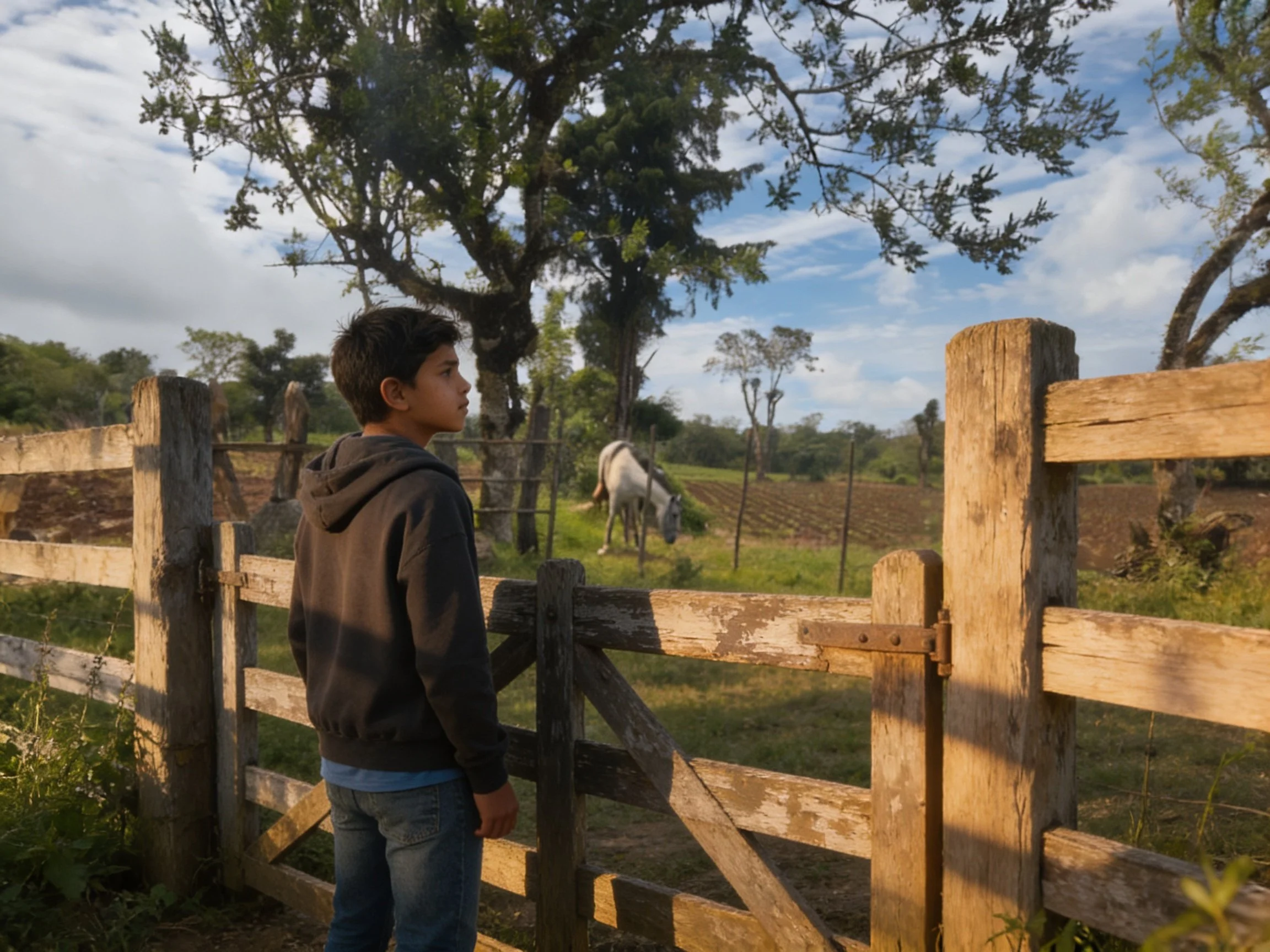
Mateo looks toward the mountains from his family farm.
For the first time, I wasn't looking at a character concept anymore.
I was looking at Mateo.
From that moment on, writing became different.
I could see him walking the mountain trails.
I could picture him standing beside the ancient Bible in the old church.
I could imagine the expressions on his face as he witnessed the great moments of Scripture.
He had finally become real.
Once I knew who Mateo was, the rest of the story began to breathe.
He wasn't there to replace the heroes of Scripture.
He was there to stand quietly beside them.
To see what they saw.
To learn what they learned.
And to invite young readers to discover those same timeless truths with him.
In next week's Behind the Story, I'll introduce you to another very important member of Mateo's world—a wise grandmother named Doña Rosa, whose love, faith, and quiet wisdom help guide a young boy through experiences unlike anything he could have imagined.
When the Story Is Not Yours Alone
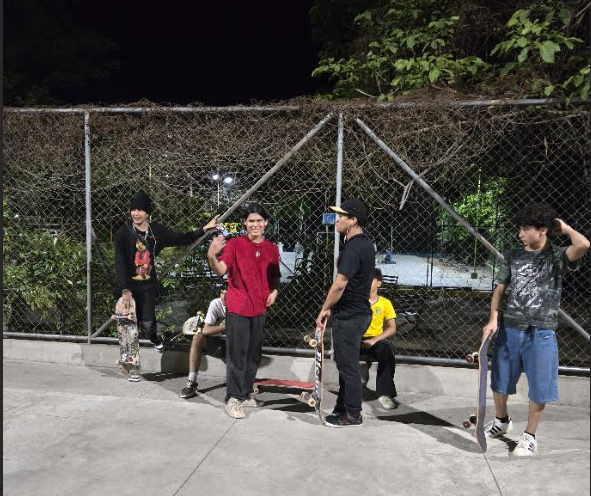
Friendships at the León skatepark. Before I could write their story, I first needed to listen.
Let every man be swift to hear, slow to speak, slow to wrath. — James 1:19 (KJV)
Once I recognized that the story for my third book had been in front of me all along, another realization quickly followed.
This story did not belong only to me.
The young men who helped create León’s skateboarding community had lived it. They had found ways to skate when equipment was difficult to obtain and safe places to practice were almost nonexistent. They had shared boards, built ramps, encouraged one another, and kept going when it would have been easier to quit.
I had been fortunate enough to become their friend.
But friendship did not automatically give me the right to tell their story however I pleased.
If I was going to write Ride the Fire, I needed to listen.
That sounds simple, but listening is different from merely hearing.
Hearing gathers facts.
Listening tries to understand what those facts meant to the people who experienced them.
I needed to learn more than where they skated or how they found their first boards. I needed to understand what drew them together, what obstacles they faced, and why the community they created mattered so deeply to them.
Their experiences would inspire the novel, but I did not want to take their lives and simply turn them into convenient pieces of fiction.
I wanted to honor them.
That meant asking questions.
It meant hearing different memories of the same years.
It meant recognizing that no single person sees an entire story.
And sometimes, it meant setting aside what I thought I understood so that someone else could tell me what I had missed.
“Let every man be swift to hear, slow to speak, slow to wrath.”
— James 1:19 (KJV)
We often think of this verse as guidance for avoiding arguments. And it certainly is.
But I believe it also teaches us something about understanding people.
We cannot truly know another person’s story if we are always preparing our own response.
We cannot learn what shaped someone if we decide in advance what their experience must have been.
And we cannot honor people well if we speak for them before we have taken the time to listen to them.
This lesson extends far beyond writing.
Every person we meet carries memories, struggles, hopes, and experiences we cannot see from the outside.
We may notice what they do without understanding why they do it.
We may see where they are today without knowing the road that brought them there.
We may even believe we know someone well while still knowing only a small part of their story.
Writing Ride the Fire reminded me that listening is one of the greatest gifts we can offer another person.
Not listening so that we can correct them.
Not listening while waiting for our turn to speak.
Simply listening because their story matters.
The book may have carried my name on the cover.
But the story behind it belonged to a community.
My responsibility was to listen closely enough to tell it with care.
Which Came First… Mateo or Miraflor?
When readers discover Mateo and the Secrets of the Eternal Word, they often assume the story began with a young boy named Mateo. In reality, it began with a search for the perfect place to tell his story.
After finishing Ride the Fire, I knew my next novel would also be set in Nicaragua. But this time, I wanted a very different setting. Instead of a busy colonial city like León, I was looking for a quiet mountain community where faith, family, and everyday life could naturally blend with an extraordinary adventure.
As I searched, friends began telling me about the Miraflor Nature Reserve. The more I researched it, the more convinced I became that this was the place I had been looking for. Long before I ever visited, Miraflor had already become the home of Mateo, his family, and Father Tomás in my imagination.
Then something unexpected happened.
By the time I finally traveled to Miraflor, most of the novel had already been written.
Walking its mountain roads, seeing the farms, and meeting the people confirmed much of what I had imagined. But it also taught me a few things I hadn't fully understood from my research. Those discoveries led me to make small but important changes, not only to the story itself, but also to several of the illustrations.
The church in the novel remains fictional, but the mountains, gardens, and rural landscape surrounding it now better reflect the beauty of the real Miraflor. The same is true of Mateo's home, whose gardens and surrounding landscape were also refined after my visit. Visiting the reserve helped transform those settings from imagined places into locations inspired by firsthand experience.
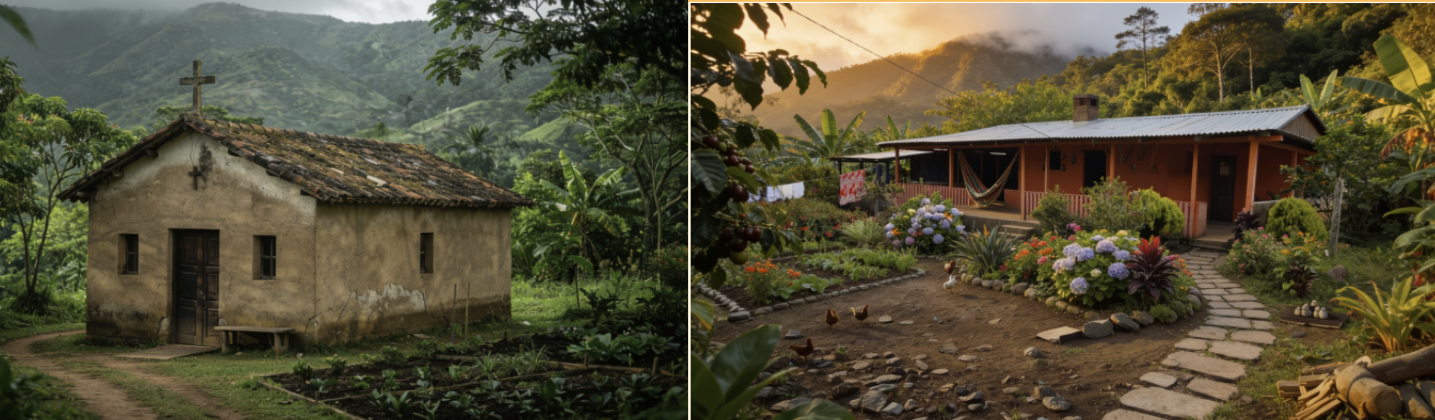
The fictional church of Father Tomás and Mateo's home were both reimagined after my visit to Miraflor, reflecting the landscapes that inspired the novel.
Looking back, I realize the answer to the question is simple.
Mateo became the heart of the story, but Miraflor gave that story a home.
Sometimes a story begins not with a character, but with a place that quietly waits to be discovered.
The Story That Was Already There
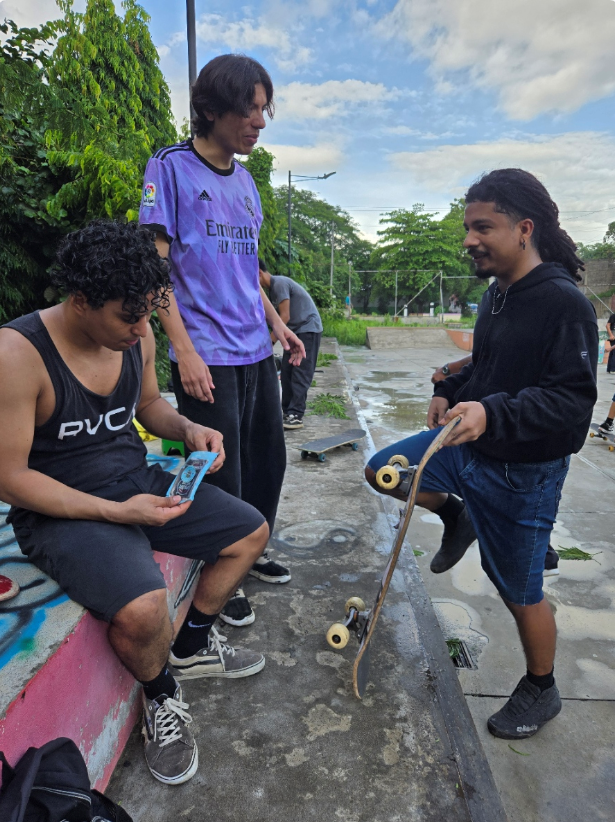
Skaters at the León skatepark in Nicaragua—friendships and everyday moments that would eventually help inspire Ride the Fire.
A man's heart deviseth his way: but the LORD directeth his steps. Proverbs 16:9 (KJV)
Two books were now behind me.
That was something I had never expected to be able to say.
The Little Chef had begun almost by accident. Brandy had given me the idea, and somewhere along the way, I discovered that I could actually take an idea and turn it into a book.
Challenge of the Heart was different. This time, I had made the deliberate decision to write again. Finishing that second book proved something to me.
The first one had not been a fluke.
But now I faced the question again.
Would there be another book?
And if there was, what would I write about?
I could have simply invented another story. There were certainly plenty of possibilities. But something had changed. I wanted the next book to mean something more to me personally.
The answer, as it turned out, had been around me for years.
I have lived in León, Nicaragua, for many years. During that time, I became friends with a number of young men who shared a passion for something I knew very little about when I first met them.
Skateboarding.
I had watched them skate through the streets of León. I had listened to their stories. I learned how difficult it had been for the first generation of skaters in a city where skateboards, equipment, and places to skate were not easy to find.
They shared boards.
They built their own ramps.
They fell, got back up, and tried again.
And somewhere along the way, they built something much bigger than a place to skateboard.
They built a community.
I had known these young men for years. Some had become good friends. I knew their struggles, their determination, and something of the history they had created.
Yet I had never thought of any of it as a book.
Sometimes we search for what comes next while overlooking what God has already placed around us.
We expect the answer to arrive as some dramatic new idea. We look ahead, wondering what door will open next, while perhaps failing to notice the people, experiences, and relationships that are already part of our lives.
That was what happened to me.
The story I was looking for wasn't somewhere in the distance.
It was already there.
I simply needed to recognize it.
That realization eventually became my third book, Ride the Fire.
But looking back, I think there was another lesson waiting for me in the process.
“A man's heart deviseth his way: but the LORD directeth his steps.”
— Proverbs 16:9 (KJV)
God doesn't always have to bring something new into our lives in order to lead us somewhere new.
Sometimes He asks us to look again at what He has already given us.
A friendship.
An experience.
A talent we haven't used.
A person whose story deserves to be heard.
An opportunity we once considered ordinary.
We may be asking God, “What's next?”
Perhaps sometimes His answer is:
“Look at what is already in front of you.”
From Ride the Fire to Mateo
When I finished writing my third book, Ride the Fire, which takes place in my beloved León, Nicaragua, I felt a deep sense of satisfaction. I had not only told the story of my skateboarding friends, but also the story of a city and close-knit community that had become part of my own life.
While waiting for Amazon to publish the book, I found myself asking a simple question: What story comes next?
Once I settled on the basic premise for Mateo and the Secrets of the Eternal Word, I knew the setting would be just as important as the story itself.
A story about Bible history and a mysterious Bible that transports a young boy into the events of Scripture needed to unfold in a place that felt authentic and believable. For me, there was no better setting than the peaceful beauty of Nicaragua's Miraflor Nature Reserve. The quiet mountain villages, breathtaking landscapes, and slower pace of life seemed like the perfect home for a story like Mateo's.
Then the research began.
Of course, the biblical events themselves had to remain faithful to Scripture. But that was only the beginning. Mateo wouldn't simply witness Bible history. He would experience the people, the sights, the sounds, and the emotions surrounding each event.
His own world also had to come alive. The daily life of a twelve-year-old boy growing up on a small family farm couldn't merely serve as a backdrop. His family, friends, school, and community would all help shape the young man he was becoming.
If a boy that young were suddenly thrust into extraordinary experiences such as the Tower of Babel, he would need trusted guides to help him understand what he had seen.
Those guides became two of my favorite characters to write: Father Tomás and Mateo's grandmother, Doña Rosa.
As the story developed, I discovered that they weren't simply supporting characters. They became the steady voices of wisdom, faith, and encouragement that every young adventurer needs.
In future Behind the Story articles, I'll introduce you to Father Tomás, Doña Rosa, Verbum Aeternum, and many of the other characters and places that helped bring Mateo's world to life.
I hope you'll join me as we continue the journey.
The Decision to Write Again

My second completed novel. Writing The Challenge of the Heart wasn't about proving I could finish another book. It was about discovering there was another story waiting to be told.
Commit thy works unto the Lord, and thy thoughts shall be established. 📖 Proverbs 16:3
Finishing The Little Chef answered one question.
I had proven to myself that I could finish a novel.
But another question quietly took its place.
"Should I write another one?"
No one was asking me to.
I wasn't thinking about becoming an author.
I simply wondered if there was another story worth telling.
That question became The Challenge of the Heart.
Unlike my first novel, this time I wasn't trying to prove I could finish.
I was learning that writing wasn't about checking something off a list.
It was becoming part of who I was.
Looking back now, I realize God was gently changing my direction one book at a time.
I couldn't see where the road would eventually lead—to León, to the skateboard community, to Miraflor, or to Mateo and the Secrets of the Eternal Word.
I only knew there was another story waiting.
So I began writing again.
The Question After the Last Page
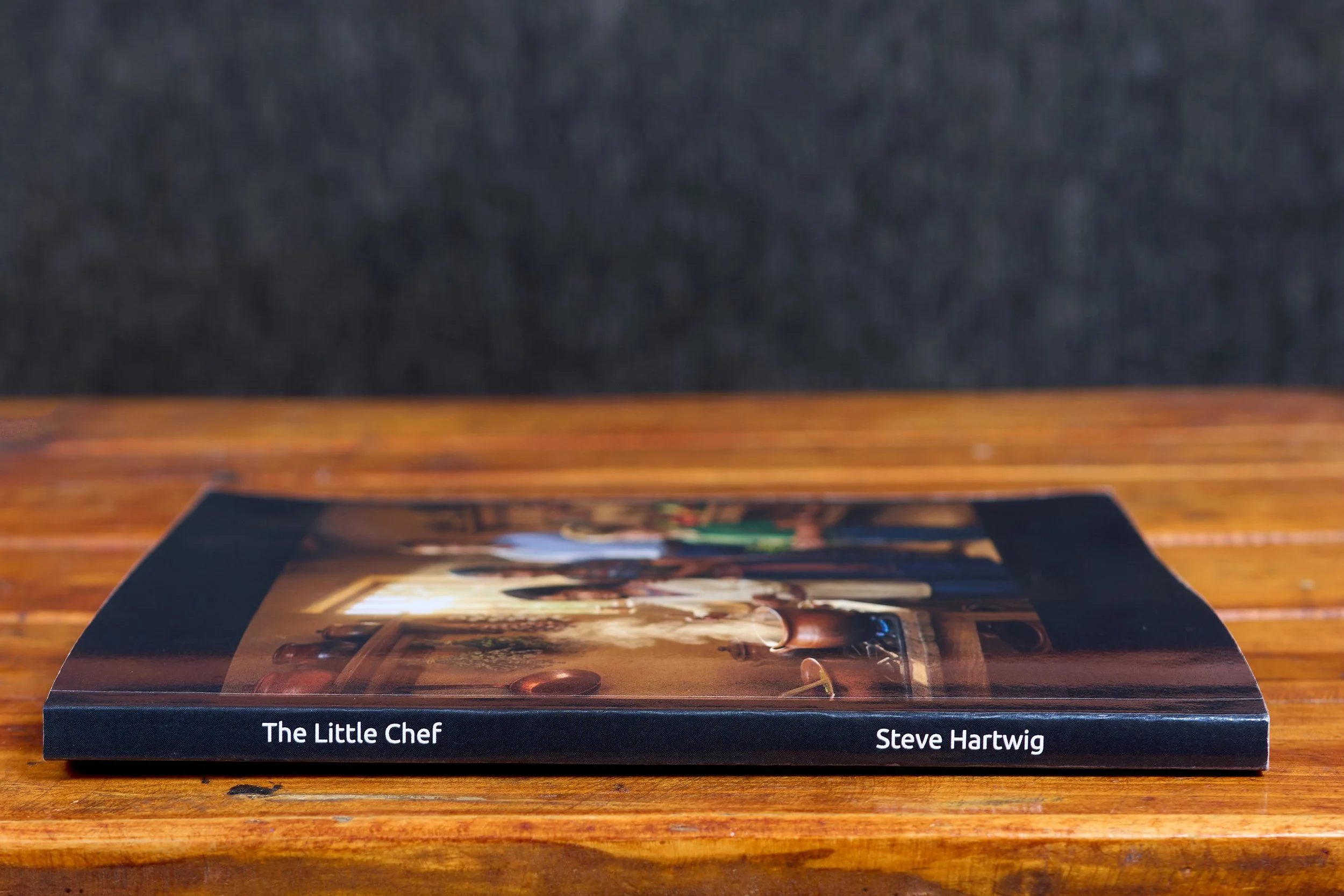
My first completed novel. Finishing The Little Chef answered one question—but it immediately led to another.
Being confident of this very thing, that he which hath begun a good work in you will perform it until the day of Jesus Christ. 📖 Philippians 1:6
Finishing The Little Chef was something I never expected to do.
For years, the manuscript had sat unfinished. Then, during my recovery from a broken leg, I finally completed it and held my first published novel in my hands.
I had answered one question.
"Can I actually finish a novel?"
The answer was yes.
For a while, I simply enjoyed that accomplishment.
Then another question quietly entered my mind.
"Was that my only story?"
I wasn't thinking about becoming a full-time author.
I wasn't making plans for a series of books.
I was simply wondering if God had given me another story to tell.
That question became The Challenge of the Heart.
Writing a second novel was different from writing the first. The fear of never finishing was gone, but now I wanted to know whether the first book had been a one-time accomplishment or the beginning of something more.
Looking back now, I realize God was gently teaching me an important lesson.
Often, He doesn't reveal the whole journey at once.
He simply places the next question in front of us.
When we faithfully answer that question, He reveals the next step.
I couldn't see where that second book would eventually lead.
I certainly never imagined it would bring me to the streets of León, the skateparks, the mountains of Miraflor, or the story of a young boy named Mateo.
But every journey has a second step.
For me, it began with one simple question after I reached the last page.
Sometimes the end of one chapter is simply God's invitation to begin another.
👉 Explore the books here:
https://www.steverhartwigauthor.com/books
Read this post in Spanish here:
https://www.steverhartwigauthor.com/blog-espanol
How Brandy Turned Me Into an Author
This week I begin a new series called "The Stories Behind the Stories."
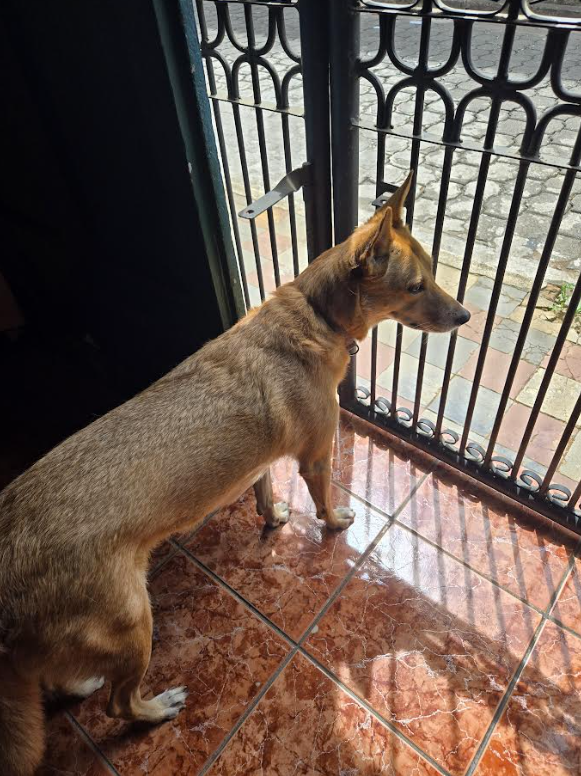
Brandy, the little dog who unknowingly changed the direction of my life. Looking back, I can see that God was already writing a new chapter.
And we know that in all things God works for the good of those who love Him... 📖 Romans 8:28
If someone had told me a few years ago that my dog Brandy would play a part in making me an author, I would have laughed.
But that's exactly where the story begins.
One ordinary day I stood up from my desk without realizing Brandy was lying at my feet.
I tripped over her.
The fall broke my leg.
At the time, it felt like nothing more than a painful accident.
I had no idea that the months ahead would change the direction of my life.
Unable to get around, I suddenly found myself with something I hadn't had in years—time.
There wasn't much I could do physically, but I still needed something to occupy my mind.
That led me back to a story I had started years earlier.
It was called The Little Chef.
The manuscript had become cluttered with too many ideas and had eventually been forgotten.
Now, with nowhere to go and plenty of quiet hours, I opened it again.
At first, I wasn't thinking about becoming an author.
I simply wondered,
"Can I actually finish this?"
Little by little, the story came together.
Eventually, it became my first published novel.
Looking back now, I smile when I think about how it all started.
A dog.
A fall.
A broken leg.
Months I never would have chosen.
Yet God saw something I couldn't.
He was opening a new chapter long before I realized one was beginning.
Sometimes God's greatest blessings arrive disguised as interruptions.
Brandy didn't make me an author.
But God used one unexpected moment involving a faithful little dog to begin a journey I never planned to take.
👉 Explore the books here:
https://www.steverhartwigauthor.com/books
Read this post in Spanish here:
https://www.steverhartwigauthor.com/blog-espanol
GOD OFTEN USES ORDINARY PEOPLE
But God chose the foolish things of the world to shame the wise; God chose the weak things of the world to shame the strong. 📖 1 Corinthians 1:27

Author Steve R. Hartwig with his longtime friend Jazmin overlooking the city of Matagalpa, Nicaragua, where Steve lived during his first seven months in the country. One of God's earliest blessings was the friendships He placed in my life—ordinary people whose kindness helped shape an extraordinary journey.
When we read the Bible, it's easy to focus on the great heroes of faith.
Moses.
David.
Paul.
Yet each of them was an ordinary person before God called them.
The same is true today.
Most of the people who have influenced my life in Nicaragua are not famous.
They are neighbors.
Friends.
Teachers.
Skaters.
Parents.
Business owners.
People simply living their everyday lives.Yet through ordinary conversations, quiet acts of kindness, and faithful friendships, God has used them to shape my journey.
Looking back, I realize that many of the greatest blessings in my life did not come through extraordinary events.
They came through ordinary people who were willing to care.
Perhaps we spend too much time waiting for God to send someone remarkable.
Maybe He has already placed the right people around us.
And perhaps He wants us to become one of those ordinary people in someone else's story.
God has always done extraordinary things through ordinary people who simply make themselves available.
Maybe that is still how He chooses to work today.
👉 Explore the books here:
https://www.steverhartwigauthor.com/books
Read this post in Spanish here:
https://www.steverhartwigauthor.com/blog-espanol
WE NEVER KNOW WHO NEEDS ENCOURAGEMENT
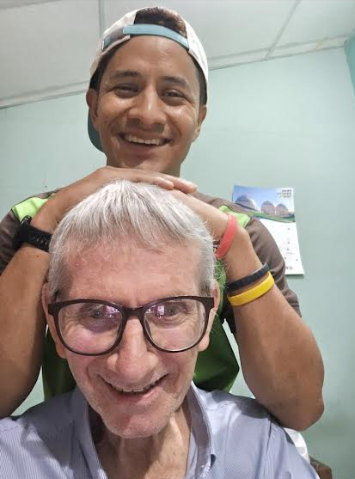
Steve Hartwig and his longtime friend Rolando during Steve's recovery. Sometimes encouragement flows both ways. We never know how God will use a friendship to strengthen both lives.
And let us consider how we may spur one another on toward love and good deeds. 📖 Hebrews 10:24
Encouragement doesn't always come in dramatic moments.
Sometimes it is simply a smile.
A kind word.
A phone call.
Taking time to listen.
Or reminding someone that they matter.
The interesting thing about encouragement is that we rarely know when it is most needed.
A conversation that seems ordinary to us may become unforgettable to someone else.
I have experienced this many times during my years in Nicaragua.
There were days when I thought I was encouraging someone else, only to discover later that they had encouraged me even more.
Friendships have a way of doing that.
When we invest in other people, God often blesses both lives.
We don't always see the results immediately.
Sometimes we never know the difference a small act of kindness has made.
But God knows.
He can use the simplest moments to strengthen someone who was beginning to lose hope.
We don't have to change the whole world.
Sometimes we only need to encourage the person standing right in front of us.
That simple act may become part of a much bigger story than we ever imagined.
👉 Explore the books here:
https://www.steverhartwigauthor.com/books
Read this post in Spanish here:
https://www.steverhartwigauthor.com/blog-espanol
EVERY PERSON HAS A STORY

Author Steve R. Hartwig with Axel, Maria, and María in León, Nicaragua. During my recovery, each became an important part of my story. As I came to know them, I also discovered that each of them had a unique story of their own.
Everyone should be quick to listen, slow to speak and slow to become angry. 📖 James 1:19
One of the greatest lessons I have learned during my years in Nicaragua is that every person has a story.
Some stories are filled with joy.
Others are marked by struggle, loss, or unexpected change.
Most of them remain untold until someone takes the time to listen.
When I first arrived in León, I knew almost no one. Every face was a stranger, every conversation an opportunity to learn something new.
Over the years, those conversations became friendships.
I learned about families, dreams, disappointments, and hopes for the future.
Some of those stories eventually found their way into my books.
Others simply became part of my own journey.
Looking back, I realize that the greatest gift was never just telling my story.
It was having the privilege of hearing the stories of others.
Listening has a way of changing us.
It teaches compassion.
It builds understanding.
It reminds us that every person we meet is carrying experiences we cannot see.
Sometimes the best way to show God's love is not by having all the right answers, but by giving someone the opportunity to be heard.
Everyone has a story.
And every story has value.
👉 Explore the books here:
https://www.steverhartwigauthor.com/books
Read this post in Spanish here:
https://www.steverhartwigauthor.com/blog-espanol
SOME BLESSINGS TAKE TIME TO GROW

Author Steve R. Hartwig with Bismarck and his family during a trip in Nicaragua in 2022. Some of life's greatest blessings are friendships that grow quietly over the years, becoming far more meaningful than we could have imagined when they first began.
Those who sow with tears will reap with songs of joy. 📖 Psalm 126:5
We live in a world that likes quick results.
We want immediate answers, instant success, and visible progress.
Yet many of God's greatest blessings develop slowly.
Friendships take time to grow.
Trust takes time to build.
ommunities are formed one relationship at a time.
Looking back over my years in León, I can see many examples of this truth.
When I first arrived, I knew very few people.
The city was unfamiliar.
The future was uncertain.
I could not have imagined the friendships, opportunities, and experiences that would become part of my life.
Many of those blessings began with simple conversations.
A chance meeting.
A shared meal.
An introduction from a friend.
Small moments that seemed ordinary at the time.
Over the years those moments became relationships.
Those relationships became stories.
Some of those stories eventually became books.
What I appreciate most is that God was working long before I could see the results.
Even during difficult seasons, He was planting, watering, and growing things beneath the surface.
The harvest did not appear overnight.
But looking back now, I can see that many of the blessings I value most today required patience.
God's timing is rarely rushed.
Yet it is always worth trusting.
Some blessings take time to grow
👉 Explore the books here: https://yourwebsite.com/books
Read this post in Spanish here: https://www.steverhartwigauthor.com/blog-espanol
THE SEEDS WE PLANT TODAY

Author Steve R. Hartwig with neighborhood children in León, Nicaragua, nearly a decade ago. At the time, none of us could see what the years ahead would bring, but many of life's greatest blessings begin as seeds planted in ordinary days.
I planted the seed, Apollos watered it, but God has been making it grow. 📖 1 Corinthians 3:6-7
Some of the most important things in life begin as small seeds.
A conversation.
A friendship.
An act of kindness.
An opportunity that seems insignificant at the time.
When we plant a seed, we rarely see immediate results. Growth happens slowly, often beneath the surface, long before it becomes visible.
The same is true in our lives.
When I first arrived in Nicaragua, I had no idea what the years ahead would hold. I simply tried to be faithful in the opportunities God placed before me.
Some opportunities seemed small.
Getting to know neighbors.
Spending time with young people.
Listening to people's stories.
Building friendships one conversation at a time.
At the time, I could not see what those seeds would become.
Years later, I can look back and see that many of the blessings in my life grew from moments that once seemed ordinary.
Some seeds became friendships.
Some became opportunities to serve.
Some became stories.
Some eventually became books.
Not every seed grows in the same way.
Not every seed grows at the same speed.
But God often uses small beginnings to accomplish things we could never imagine.
Our responsibility is not to produce the harvest.
Our responsibility is to plant faithfully.
God takes care of the growth.
The seeds we plant today may become blessings tomorrow that we cannot yet see.
👉 Explore the books here: https://yourwebsite.com/books
Read this post in Spanish here: https://www.steverhartwigauthor.com/blog-espanol
GOD IS STILL WRITING THE STORY
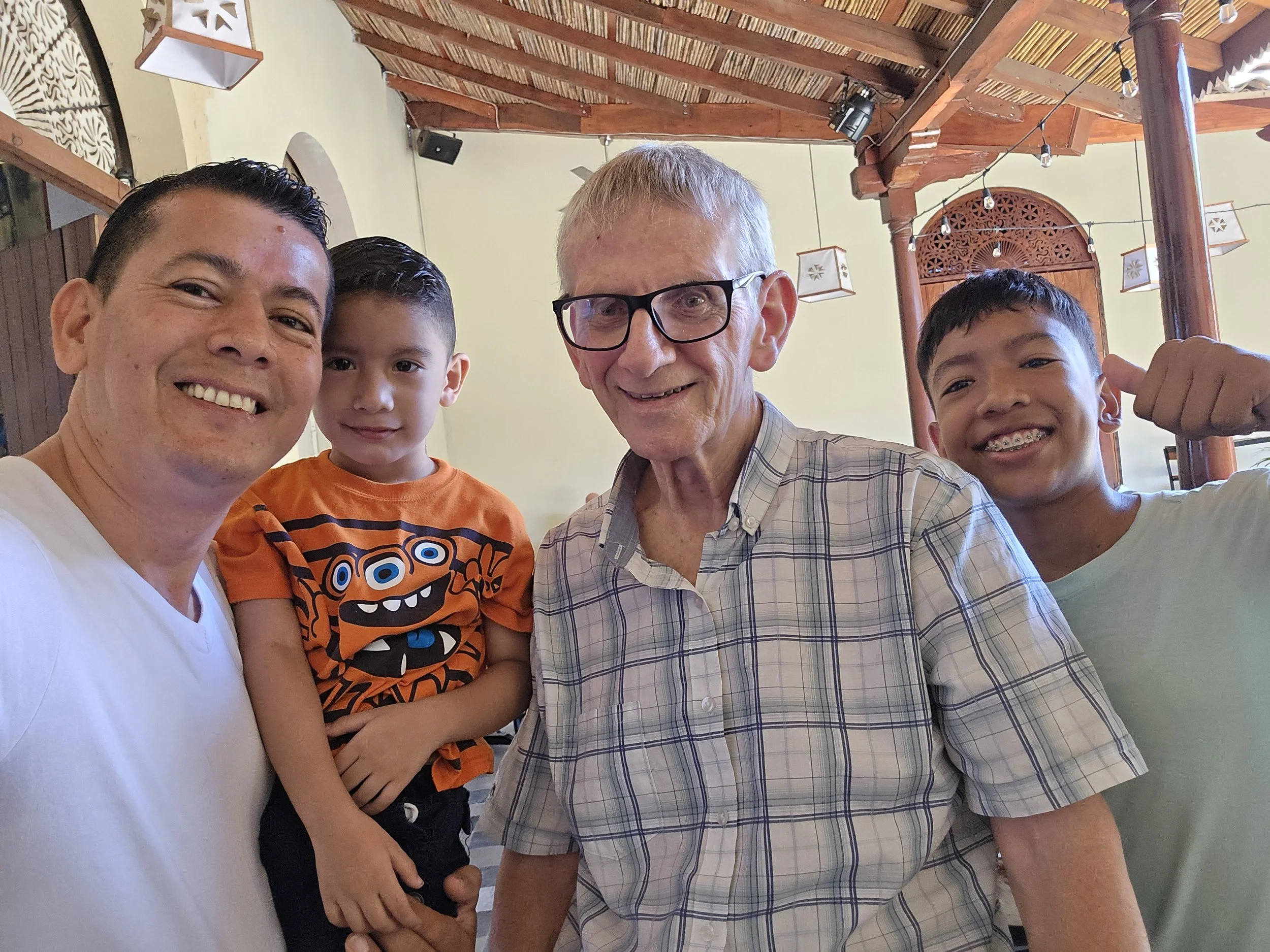
Author Steve R. Hartwig with friend Aaron and his sons in León, Nicaragua. When Steve first arrived in Nicaragua, he could not have imagined the friendships and relationships that would become part of his story over the years.
Being confident of this, that He who began a good work in you will carry it on to completion until the day of Christ Jesus. 📖 Philippians 1:6
When we look back on our lives, it is often easy to identify the chapters that changed everything.
A move to a new city.
A new friendship.
A challenge that tested our faith.
An opportunity we never expected.
When I first arrived in Nicaragua, I thought I was beginning a simple chapter called retirement. I was looking forward to a warmer climate, a slower pace of life, and the opportunity to enjoy the years ahead.
I had no plans to become an author.
I had no idea that I would one day write books inspired by the people and experiences I found here.
I certainly did not imagine becoming friends with local skateboarders, sharing their stories, or seeing those experiences become part of a novel.
Yet that is often how God works.
We think we understand the chapter we are entering, but God is already preparing chapters we cannot yet see.
Looking back, I can see many moments that seemed ordinary at the time. Conversations. Friendships. Walks through the city. Small opportunities that appeared without much fanfare.
Each one became part of a larger story.
And that story is still being written.
Sometimes we are tempted to believe that the most meaningful chapters are behind us.
But God is not only the God of our past.
He is also the God of our future.
The same God who guided us through previous chapters continues to guide us today.
There are still people to meet.
Still lessons to learn.
Still opportunities to serve.
Still pages to write.
We may not know exactly what comes next, but we can trust the One who does.
Because God is still writing the story.
👉 Explore the books here: https://yourwebsite.com/books
Read this post in Spanish here: https://www.steverhartwigauthor.com/blog-espanol
Every Chapter Prepares Us for the Next One

Author Steve R. Hartwig shares cake and conversation with skaters Edgard and Marco in León, Nicaragua. Friendships formed over the years became part of a story he never imagined when he first arrived.
He has made everything beautiful in its time. - 📖 Ecclesiastes 3:11
When we look back over our lives, it is easy to focus on individual chapters.
A season of learning.
A season of waiting.
A season of growth.
A season of new beginnings.
At the time, those chapters often feel separate from one another.
We do not always understand how they fit together.
Yet with enough distance, we begin to see something remarkable.
Each chapter was preparing us for the next one.
When I first arrived in Nicaragua, I believed I was beginning a chapter called retirement.
And I was.
But that chapter also prepared me for friendships I had not yet formed.
Those friendships prepared me for experiences I had not yet imagined.
Those experiences prepared me for stories that had not yet been written.
And those stories opened doors that I never expected to walk through.
At the time, none of those connections were obvious.
I could only see the chapter I was living.
I could not see the chapter that was coming next.
Looking back now, I can see how God was using each season to prepare me for another.
The challenges taught lessons that would later prove valuable.
The friendships introduced opportunities that did not yet exist.
The ordinary days quietly built a foundation for future blessings.
Nothing was wasted.
Perhaps that is one of the most comforting truths about following God.
Even when we do not understand the purpose of a season, He does.
The chapter we are living today may be preparing us for something we cannot yet imagine.
A new friendship.
A new opportunity.
A new calling.
A new way to serve others.
That does not mean every chapter is easy.
Some are marked by uncertainty.
Some by disappointment.
Some by waiting.
Yet even those chapters can become part of something beautiful when viewed through the lens of God's timing.
Today, there are still pages of my story that remain unwritten.
There are opportunities whose outcomes I do not know.
There are paths I have not yet walked.
But experience has taught me to trust the Author.
The God who guided me through previous chapters is already preparing the next one.
And perhaps He is doing the same in your life.
So if the chapter you are living today feels ordinary, uncertain, or incomplete, take heart.
The story is not finished.
And the chapter you are living right now may be preparing you for something wonderful still to come.
👉 Explore the books here: https://www.steverhartwigauthor.com/books
👉 Read this post in Spanish here: https://www.steverhartwigauthor.com/blog-espanol
We Rarely See the Whole Road

In their hearts humans plan their course, but the Lord establishes their steps. - 📖 Proverbs 16:9
Most of us would like to know where the road ahead is leading.
We make plans.
We set goals.
We imagine what the next chapter of life will look like.
There is nothing wrong with planning. In fact, planning can be wise.
When I moved to Nicaragua, I thought I knew what the future would hold.
I imagined a quieter life.
A different climate.
New experiences and new surroundings.
Those things certainly became part of my story.
But they were not the whole story.
I could not see the friendships that would develop.
I could not see the books that would be written.
I could not see the opportunities that would arise years later.
At the time, I only saw the next step.
Looking back, I realize that God often works that way.
He rarely reveals the entire journey at once.
Instead, He invites us to trust Him with the next step.
Then the next.
And then another.
If we could see everything ahead, we might become overwhelmed.
We might hesitate.
We might even choose not to begin.
Instead, God gives us enough light for today's path while holding tomorrow in His hands.
That requires faith.
Not faith that we know exactly where we are going.
But faith that God does.
There are still many things in my own life that I cannot see clearly.
There are opportunities whose outcomes I do not know.
Projects whose future remains uncertain.
Relationships that continue to grow and develop.
Yet experience has taught me something important.
The God who guided my steps yesterday can be trusted with tomorrow.
Perhaps there is a part of your journey that feels uncertain today.
A decision you need to make.
A path you are considering.
A future you cannot fully see.
Take comfort in knowing that you do not need to see the entire road.
You only need enough faith to take the next step.
And sometimes that is exactly where God meets us.
👉 Explore the books here: https://www.steverhartwigauthor.com/books
👉 Read this post in Spanish here: https://www.steverhartwigauthor.com/blog-espanol
God Often Works Through Ordinary Days

Daily life unfolds in León, Nicaragua, as people go about their ordinary routines—often unaware that today's small moments may become part of a much larger story.
Let us not become weary in doing good, for at the proper time we will reap a harvest if we do not give up. 📖 Galatians 6:9
Most of life is made up of ordinary days.
We wake up, follow familiar routines, run errands, meet friends, answer messages, and take care of responsibilities. Often, these days seem unremarkable. We look forward to special events, major accomplishments, or significant milestones and assume those are the moments that truly matter.
Yet many of the most important things God does in our lives happen quietly, hidden within ordinary days.
A conversation that leads to a friendship.
A visit that opens a new opportunity.
A simple act of kindness that encourages someone who needed it.
Rarely do we recognize the significance of these moments while they are happening.
Looking back, I can see that many of the opportunities and friendships that have shaped my life in Nicaragua began during days that seemed completely ordinary at the time.
There was no dramatic announcement. No sign pointing toward the future.
There was simply another day.
Another conversation.
Another person to meet.
Another opportunity to say yes.
Over time, those ordinary moments became friendships, experiences, stories, and eventually even books.
Perhaps that is why Scripture encourages us not to grow weary in doing good. God is often at work long before we can see the results. The seeds we plant today may not bear fruit immediately, but they are not forgotten.
We may think nothing important is happening.
God may be building something far greater than we realize.
Today may feel like an ordinary day.
But one day you may look back and discover it was part of a much larger story.
👉 Explore the books here: https://www.steverhartwigauthor.com/books
Read this post in Spanish here: https://www.steverhartwigauthor.com/blog-espanol
Looking Back, I Can See the Connections
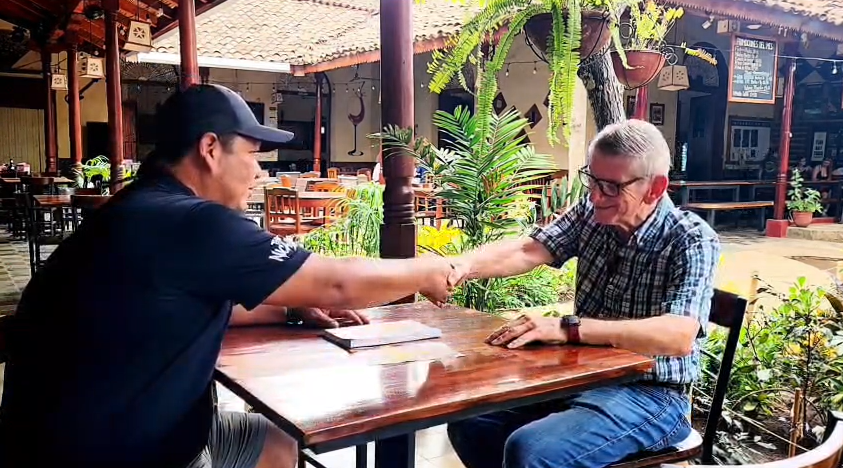
Author Steve Hartwig during an interview with The Nica Guy, Vladimir Alonso, at ViaVia León, reflecting on how seemingly unrelated experiences can become part of a larger story.
And we know that in all things God works for the good of those who love Him, who have been called according to His purpose. 📖 Romans 8:28
When I first arrived in Nicaragua, I could not have imagined the path that lay ahead.
I came seeking a place to retire. I was looking for a warmer climate, a slower pace of life, and a place where I could live comfortably. Writing books was not part of the plan. Neither was becoming involved in the local skateboarding community.
Yet over the years, small connections began to form.
I met young skaters in León. I listened to their stories. I watched their creativity, determination, and friendships. What began as simple conversations gradually gave me a deeper appreciation for a community I had barely noticed before.
Those experiences eventually inspired Ride The Fire, a novel set in León and shaped by many of the people and places I had come to know.
Even then, I did not see where the story was leading.
Recently, copies of the book arrived in Nicaragua. Through ViaVia León, I had the opportunity to meet again with Cristian, Edgard, and Marco—three skaters whose passion for skateboarding continues to inspire the next generation. Sitting together, signing books, and watching them flip through the pages was a moment I never could have predicted years ago.
Not long before that, I sat down with Vladimir from ViaVia for an interview about the book, León, and the stories behind it. That conversation opened another unexpected door and introduced the project to people far beyond the skatepark.
Looking back, I can see how many seemingly unrelated events were quietly connected.
A move to Nicaragua.
A friendship.
A conversation.
A skate session.
A book.
An interview.
A new opportunity.
At the time, each one felt small. Together, they became part of a much larger story.
Perhaps that is one of the ways God works in our lives. We often want to see the entire picture from the beginning, but more often He asks us to trust Him one step at a time. Only later do we begin to recognize how the pieces fit together.
Today, I can look back and see connections that were invisible to me years ago.
And I suspect there are still connections being formed that I cannot yet see.
God is still writing the story.
👉 Explore the books here: https://www.steverhartwigauthor.com/books
Read this post in Spanish here: https://www.steverhartwigauthor.com/blog-espanol