Why Genesis?
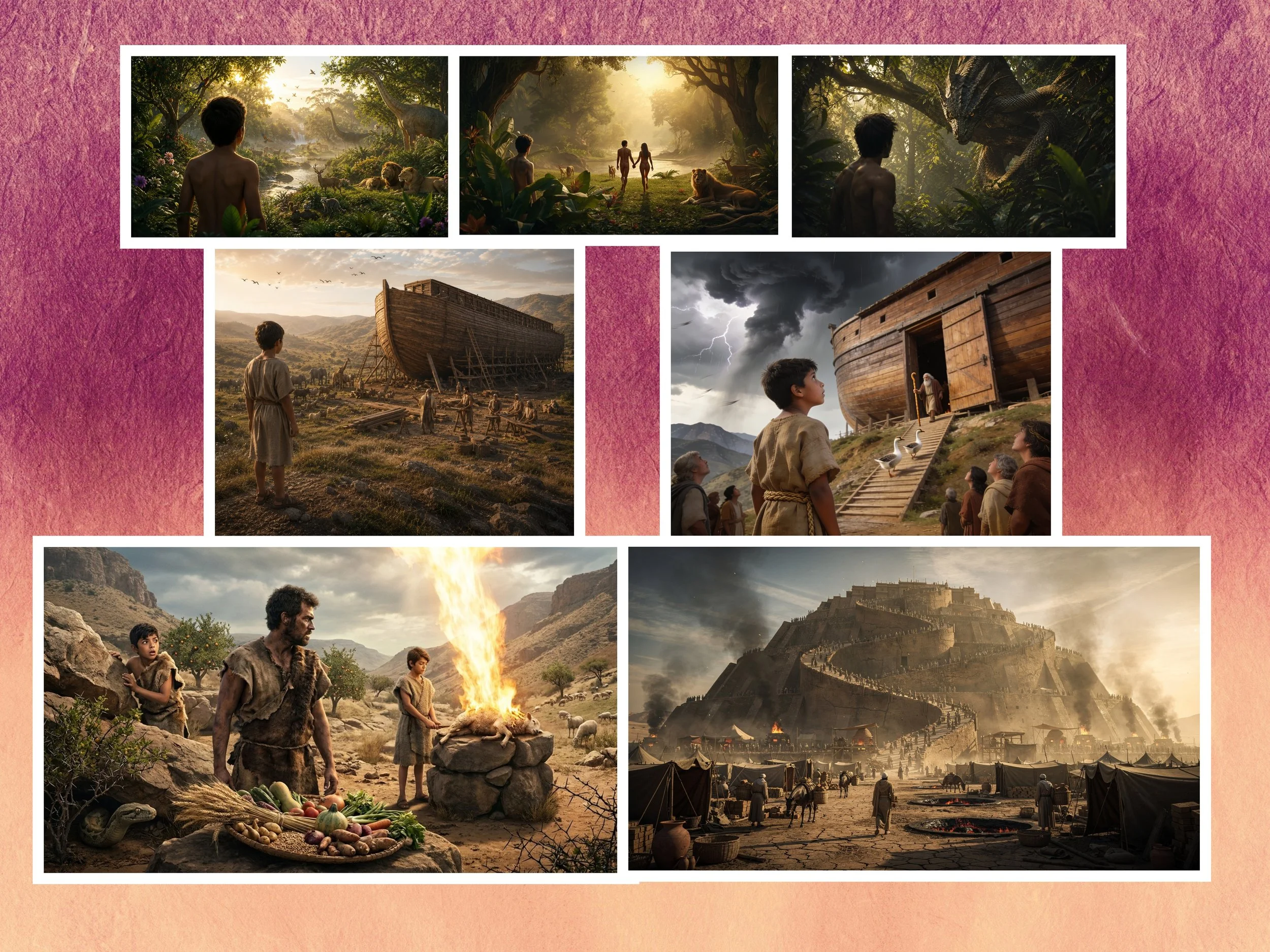
Mateo's first journeys with Verbum Aeternum take him into the opening chapters of Genesis—from Eden and Cain and Abel to Noah's Ark and the Tower of Babel.
Every story has to begin somewhere.
But when I began writing Mateo and the Secrets of the Eternal Word, that presented an unusual problem.
I had created a twelve-year-old boy living in the mountains of Nicaragua. I had given him an enormous ancient Bible called Verbum Aeternum. And somehow, that mysterious book was going to allow Mateo to do something the rest of us can only imagine.
He wouldn't simply read Bible history.
He would enter it.
That opened up almost the entire Bible.
So where should I send him first?
Where Do You Begin?
There were certainly plenty of possibilities.
Mateo could have stood beside Moses as the Red Sea opened.
He could have watched David face Goliath.
He could have seen Daniel enter the lions' den.
Eventually, I hope Mateo will witness many of those moments.
But this was his first journey.
And the more I thought about it, the answer became obvious.
If Mateo was going to enter Bible history, he should begin where Bible history begins.
Genesis.
The beginning.
A World Mateo Had Never Seen
I wanted Mateo's first experience with Verbum to feel almost overwhelming.
One moment he is a twelve-year-old boy in the mountains of Nicaragua.
The next, he is somewhere unlike anything he has ever seen.
Eden.
Imagine what that would be like.
Mateo isn't looking at an illustration of the Garden of Eden. He isn't watching a movie. He isn't listening to someone describe it.
He is there.
He can see it.
Hear it.
Walk through it.
And then he begins to realize that he isn't merely visiting a beautiful place.
He is witnessing the beginning of the story.
Adam.
Eve.
The serpent.
The choice that changes everything.
Suddenly Genesis isn't just something Mateo has heard about in church.
It is happening around him.
But Genesis Doesn't Stay Beautiful
Of course, the story quickly becomes more difficult.
Mateo witnesses Cain and Abel.
That was important to me because I didn't want his journeys through Scripture to become sightseeing trips.
Verbum isn't taking Mateo into Bible history merely to show him spectacular things.
There is something for him to learn.
Something for him to wrestle with.
Something that will follow him home to Miraflor.
And sometimes, what he sees will be difficult.
That becomes part of Mateo's journey too.
And Then Came the Ark
Noah gave me an entirely different opportunity.
Most of us have seen pictures of Noah's Ark since childhood.
But what would it have been like to stand there while it was being built?
How enormous would it have seemed to a twelve-year-old boy?
What would Mateo have thought as the animals arrived?
And what would it feel like when the sky finally began to change and the people who had laughed at Noah suddenly realized that perhaps they should have listened?
Once again, Mateo wouldn't know the story only from words on a page.
He would experience the faith, obedience and consequences behind those words.
And Finally, Babel
By the time Mateo reaches Babel, he has already witnessed an extraordinary amount of human history.
Creation.
The fall.
Cain and Abel.
Noah and the flood.
Now he sees people trying to build their way toward heaven.
Babel gave Book One a natural ending.
Human beings had spread across the earth. Languages were divided. The world Mateo knew was beginning to take shape.
And then Mateo returned to the little mountain church in Nicaragua.
But this time, something was different.
Verbum went dark.
For Mateo, Genesis had ended.
But his adventure clearly had not.
Genesis Was Only the Beginning
Looking back, I think Genesis did something else for the story that I didn't fully appreciate when I began writing it.
Mateo was witnessing beginnings everywhere.
The beginning of creation.
The beginning of humanity.
The beginning of sin.
The beginning of families, nations and languages.
But something else was beginning too.
Mateo's own journey.
The boy who first approached Verbum could not remain exactly the same boy after everything he had witnessed.
And perhaps that is one of the reasons Genesis turned out to be exactly the right place to begin.
The Bible was beginning its story.
Mateo was beginning his.
And, although I didn't know it yet, I was beginning something too.
What started as one book about a boy from the mountains of Nicaragua stepping into Genesis was becoming a much larger journey through the Eternal Word.
Perhaps the real question was never:
Why did Mateo begin with Genesis?
Where else could he possibly have begun?
What Happens When the Book Leaves Your Hands?
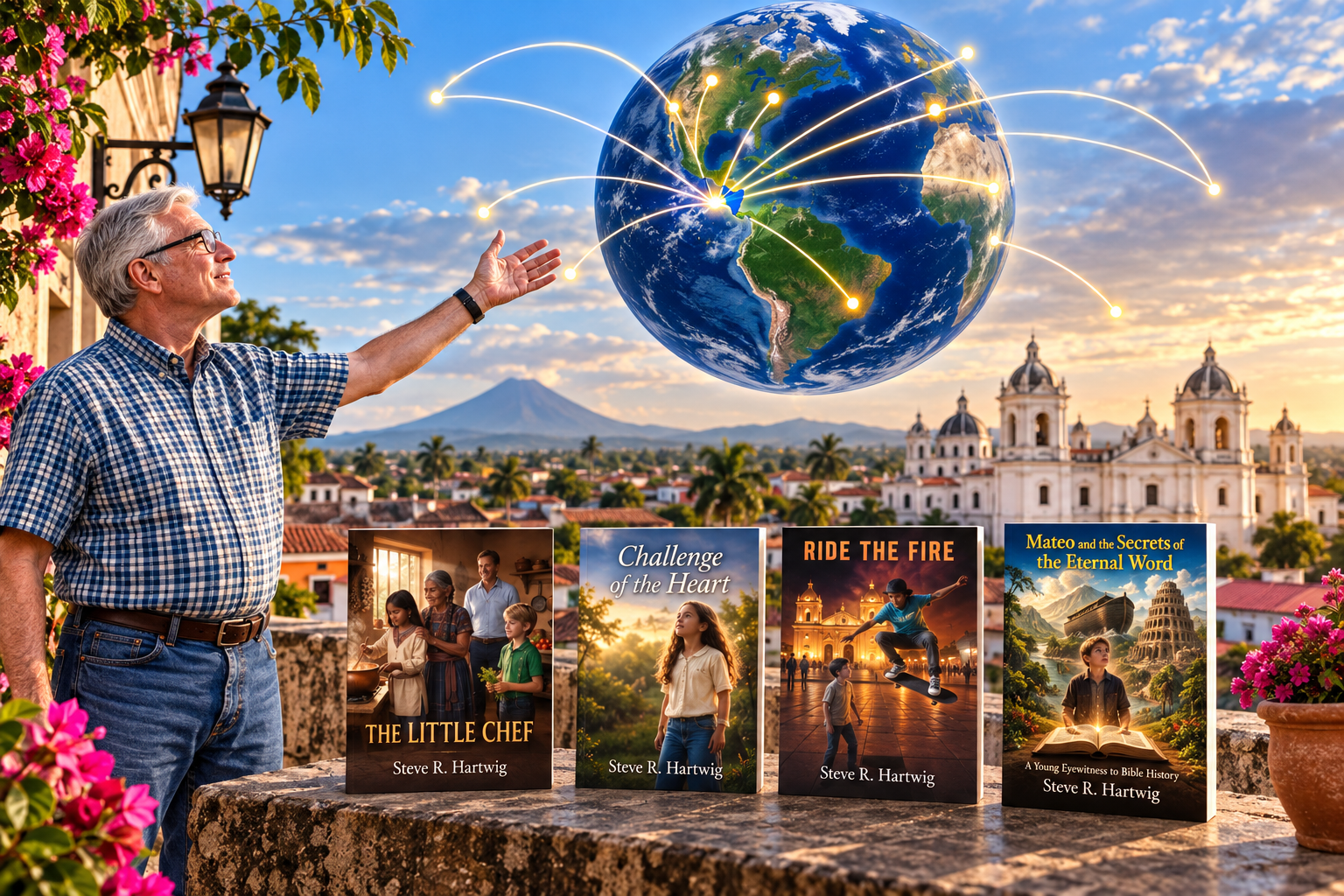
Four stories began in Nicaragua. Once they left the author's hands, there was no telling how far they might travel.
Commit thy works unto the LORD, and thy thoughts shall be established.
— Proverbs 16:3 KJV
There is a strange moment in the life of a book.
For months—or sometimes years—it belongs almost entirely to the author.
You decide what happens. You choose the characters. You write scenes no one else has ever seen. You change a word, rewrite a paragraph, move a chapter, and sometimes wonder whether any of it is working.
The characters live mostly in your imagination.
The story lives on your computer.
And then one day you press Publish.
Something changes.
The story leaves your hands.
When Someone Else Meets Your Characters
I experienced that for the first time with The Little Chef.
Then again with Challenge of the Heart.
Later came Ride the Fire.
And most recently, Mateo and the Secrets of the Eternal Word.
Each time, there was a moment when something I had created privately became something other people could read.
At first, I suppose I was mostly wondering whether they would read it.
A couple of weeks ago, I wrote about that question:
Would anyone read my books?
The answer turned out to be yes.
There were Amazon reviews. There were professional reviews. There were comments from readers. Other authors read my work and told me what they thought.
And something interesting began to happen.
People started telling me things about my own books.
Seeing the Story Through Someone Else's Eyes
A reviewer might mention a quality in Mateo that particularly stood out.
Someone else might talk about the importance of family in the story.
Another reader might focus on the faith.
Still another might be fascinated by Nicaragua or the biblical history.
I wrote all of those things.
But I didn't necessarily know which one would matter most to someone else.
That's one of the things I'm learning about being an author.
Once someone reads your story, it becomes part of their imagination too.
They meet Mateo for themselves.
They form their own picture of Doña Rosa.
They decide how they feel about Father Tomás.
They wonder what Verbum Aeternum really is.
And sometimes they see something in the story that even the author hadn't stopped to consider.
The words are still mine.
But the experience of reading them belongs to the reader.
Then the Books Started Traveling
Last Monday, I wrote about another discovery.
After wondering whether anyone could find my books, I did something very sophisticated.
I Googled myself. 😊
Then I Googled Mateo.
That was when things became interesting.
I found Mateo and the Secrets of the Eternal Word in places where I had never personally put it.
Walmart.
ThriftBooks.
Amazon sites in different countries.
Booksellers in Italy and Denmark.
And then I discovered Mateo sitting at #6 on an Amazon Hot New Releases list, with the Spanish edition at #13.
Suddenly, that little boy from the mountains of Nicaragua seemed to be traveling quite nicely without me.
But afterward, I began thinking about what that really meant.
I Can't Follow Everywhere They Go
When I wrote Ride the Fire, the story was right here with me in León, Nicaragua.
When I created Mateo, he began in my imagination and found his home in the mountains of Miraflor.
I knew exactly where those stories were.
They were with me.
That's no longer true.
A book can be sitting on someone's shelf thousands of miles away.
Someone I will never meet may be reading one tonight.
A parent may hand Mateo to a child.
A reader may recommend Ride the Fire to a friend.
Someone may discover one of the books through a Google search, a bookseller, a social media post, or perhaps simply by accident.
I'll never know about most of those moments.
And perhaps I'm not supposed to.
Letting Go
There is a lesson in that which goes beyond writing books.
We like to know what will happen with the things we create.
We like to see results.
We like to know that the work mattered.
But faith doesn't always give us that privilege.
Sometimes we're simply asked to do the work placed before us and then entrust the result to God.
That's why the words of Proverbs seem especially appropriate to me now:
“Commit thy works unto the LORD, and thy thoughts shall be established.”
I can write the story.
I can rewrite it until I'm satisfied.
I can publish it.
I can tell people about it.
I can even Google it occasionally to see where it wandered off to. 😊
But eventually, I have to let it go.
The Story Leaves Your Hands
Last week I went looking for Mateo to see where in the world he had gone.
Maybe I was asking the wrong question.
Perhaps an author's job isn't to know everywhere his story will go.
His job is to write it, polish it, send it on its way—and trust God with what happens next.
Four times now, I've taken something that existed only in my imagination and released it into the world.
I don't know everyone who has read those stories.
I don't know where all the copies are.
And I certainly don't know where they may travel next.
But perhaps that's part of the adventure too.
I know where The Little Chef began.
I know where Challenge of the Heart began.
I know where Ride the Fire began.
And I definitely know where Mateo began.
I'm becoming increasingly curious about where they'll all end up. 😊
Who Is Miguel?
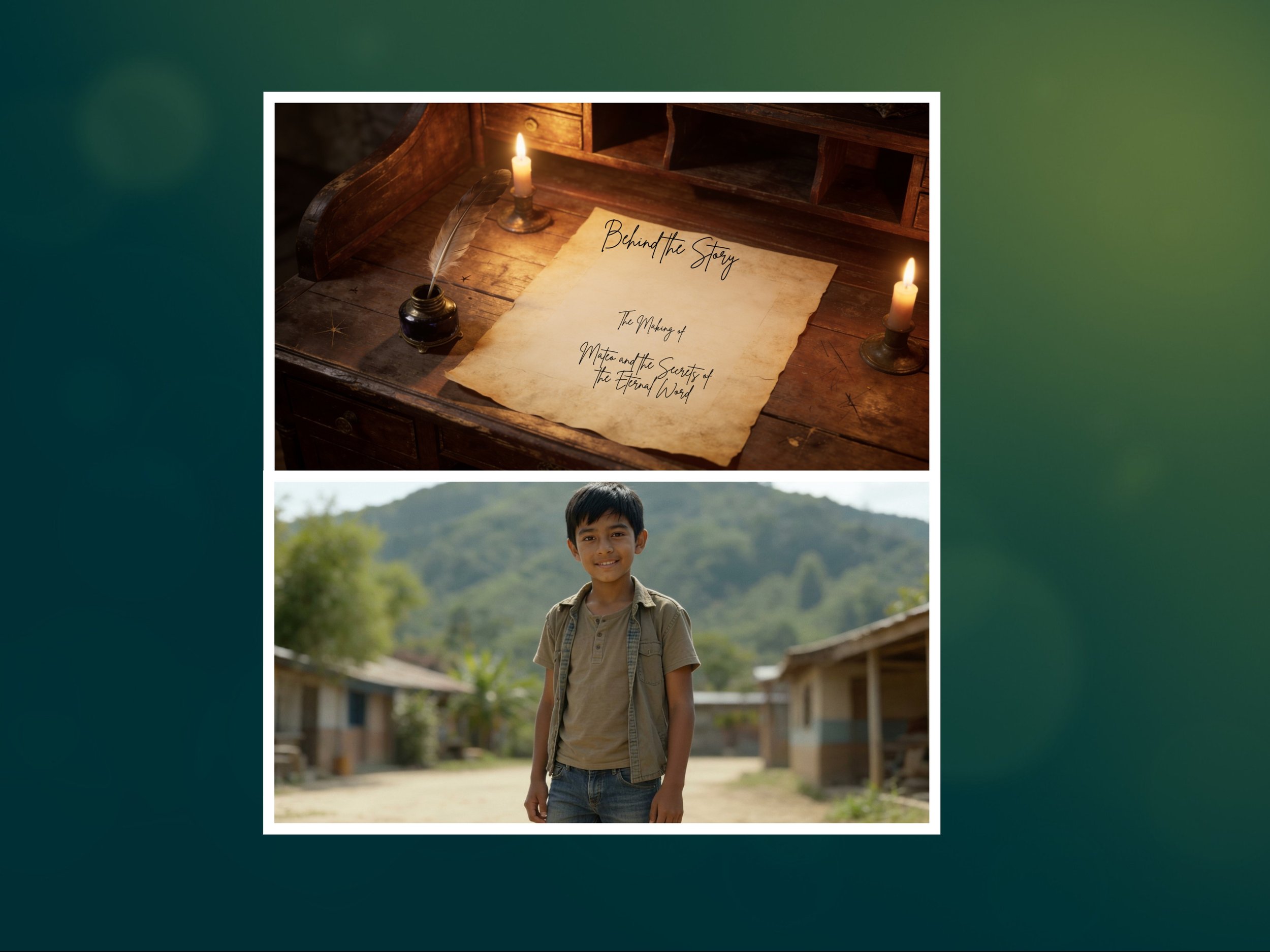
Every adventure story needs extraordinary moments.
But it also needs ordinary ones.
Before Mateo ever stepped into Bible history, he was a twelve-year-old boy living in the mountains of Nicaragua. He had a family. He went to school. He helped with chores.
And he had a best friend named Miguel.
When I began writing Mateo and the Secrets of the Eternal Word, Miguel didn't need to be mysterious. He didn't need to know ancient secrets. He didn't need to understand what was waiting for Mateo inside an abandoned church.
His purpose was much simpler.
Mateo needed a friend.
Someone His Own Age
Mateo has some remarkable people in his life.
Doña Rosa is his grandmother, but she is also a source of wisdom, faith, and quiet understanding.
Father Tomás becomes someone Mateo can turn to when the impossible things happening around him become too much to understand on his own.
But neither of them can be Miguel.
Mateo needed someone his own age.
Someone to sit beside at school. Someone to talk with, laugh with, and occasionally get into a little trouble with. Someone who knew Mateo simply as Mateo—not as the boy Verbum Aeternum had apparently been waiting for.
That became Miguel.
And as often happens when I write, a character who began with a fairly simple purpose didn't stay quite so simple.
The Friend on the Outside
For much of Mateo's early journey, Miguel knows that something is happening with his friend.
He just doesn't know what.
Mateo disappears.
Mateo returns with stories that would be difficult for anyone to believe.
And somewhere in the mountains sits an abandoned church that seems to hold answers Mateo isn't quite ready to share.
That created an interesting relationship between the two boys.
Mateo had entered a world Miguel couldn't see.
But Miguel was still his friend in the world he came home to.
Perhaps that was more important than I realized when I first created him.
Then Miguel Met Verbum
Eventually, keeping those two worlds completely separate became impossible.
Miguel entered the abandoned church with Mateo.
For the first time, he saw the enormous ancient Bible his friend had been trying to explain.
His reaction was wonderfully simple:
“It's so big!”
Mateo's answer was equally simple.
“I told you so.”
The two boys approached Verbum together.
Then the pages began to move.
They turned faster and faster until suddenly they stopped.
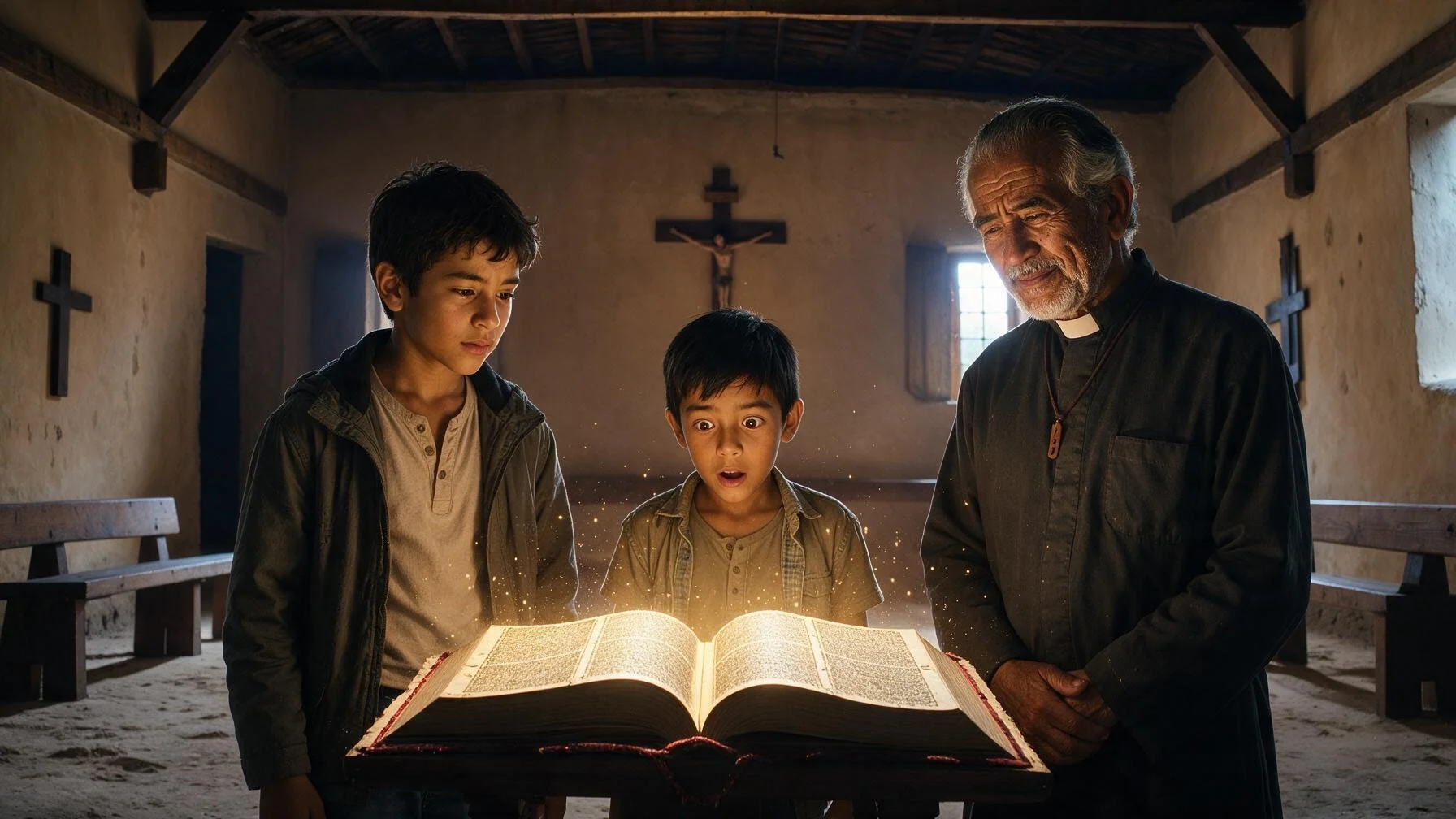
Miguel sees Verbum Aeternum for himself for the first time, with Mateo and Father Tomás beside him.
A verse began to glow:
“Therefore, comfort one another and build each other up, just as you are already doing.”
— 1 Thessalonians 5:11 LLV
Miguel stared at the words.
“Whoa! Look at what it says. What can it mean?”
Father Tomás was there with them.
But this time, something was different.
Mateo was no longer the only boy standing before Verbum Aeternum.
Miguel had entered that part of his world.
More Than Mateo's Sidekick
I never wanted Miguel to become simply the friend who follows the hero around.
Mateo's journey belongs to Mateo.
Verbum was waiting for him.
The extraordinary experiences that follow are part of something Mateo is only beginning to understand.
Miguel has a different role.
He is the friend who helps keep Mateo connected to ordinary life.
He doesn't have to understand everything Mateo experiences to stand beside him.
He doesn't have to solve the mysteries.
He doesn't have to become another Mateo.
He only has to be Miguel.
And perhaps that is why the verse Verbum showed the boys fits them so well.
Comfort one another.
Build each other up.
Those aren't instructions for grand adventures.
They're instructions for friendship.
The Friend Who Walks Beside Him
When I first created Miguel, I don't think I understood how important he might eventually become.
I simply knew Mateo needed a friend.
But characters have a way of growing as their stories grow.
Miguel became curious.
He began noticing things.
He began asking questions.
And eventually, he found himself standing beside his best friend in an abandoned mountain church, staring at a Bible unlike anything he had ever seen.
Long before Miguel understood what was happening to Mateo, however, he was already doing exactly what Verbum would one day tell the two boys to do.
He was building his friend up.
Doña Rosa helps guide Mateo.
Father Tomás helps him understand.
Verbum Aeternum opens a door to a world Mateo could never have imagined.
But Miguel does something equally necessary.
He walks beside him.
Mateo may be the one Verbum Aeternum was waiting for.
But even a boy chosen for an extraordinary journey shouldn't have to walk through ordinary life alone.
That's where Miguel comes in.
Where in the World Is Mateo?
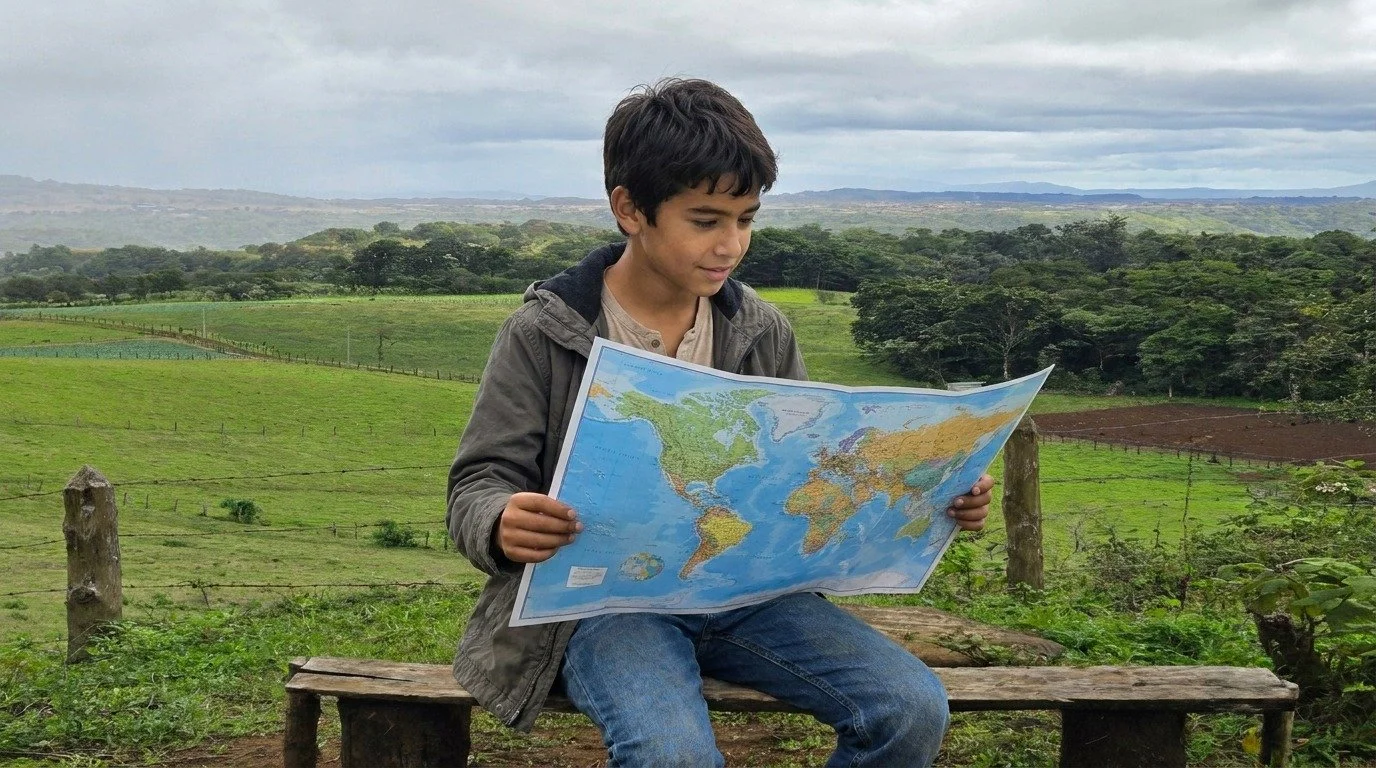
Mateo studies a world map from his home in the mountains of Nicaragua—perhaps wondering just how far his story has traveled.
Cast thy bread upon the waters: for thou shalt find it after many days.
— Ecclesiastes 11:1 KJV
A couple of weeks ago, I asked a question here in this blog.
Now that I had written four books, would anyone read them?
The answer, I'm happy to say, was yes.
I had proof.
There were some nice Amazon reviews. There were also reviews from platforms that professionally review books submitted to them. And when another author reviews your book, it feels like an honor—especially when that author really likes the book and gives it a high rating.
I even discovered one of my books placed rather nicely among prominent Christian fiction novels by some fairly well-known authors.
So then the question became:
How can people find my books?
It probably sounds a little vain, but what better way to find out than by doing a Google search?
So that's what I did.
Searching for an Author
First, I searched for my author name:
Steve R. Hartwig.
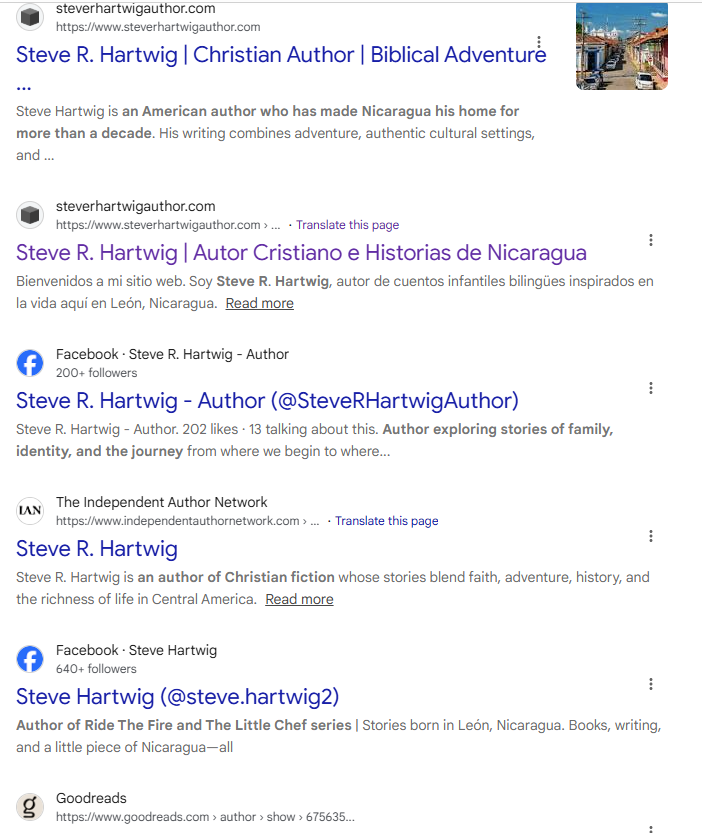
A Google search for Steve R. Hartwig reveals an author website, social media pages, Independent Author Network, Goodreads, and more.
Of course, I found my Facebook pages, along with Instagram and Threads. But I was especially happy to see that my author website—the site I have worked so hard to create, update, and keep fresh with new content and blogs—had also found its way onto Google.
I found my author profile on Goodreads. The Independent Author Network appeared with listings of my books across its platforms, including some I don't personally use, such as X and Bluesky.
I kept scrolling.
And scrolling.
I couldn't believe that I was halfway through Page 2 of Google before my name finally began to fade away.
I thought that was pretty encouraging.
But then another thought occurred to me.
What would happen if I searched for one of my books?
Then I Searched for Mateo
Since Mateo and the Secrets of the Eternal Word is my latest publication, I decided to start there.
That's when the biggest surprise came.
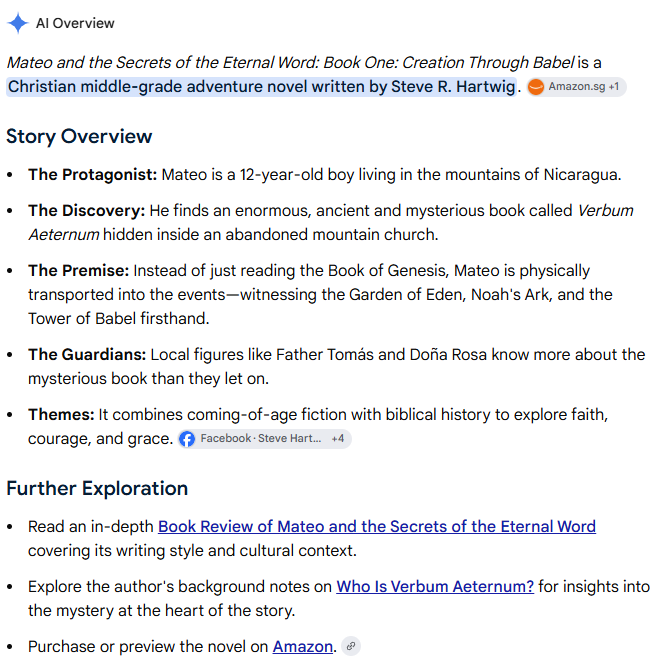
Google's overview of Mateo and the Secrets of the Eternal Word recognizes Mateo, Verbum Aeternum, Father Tomás, Doña Rosa, and the story's biblical adventure.
Right at the top of the page, Google presented a full overview of the book. As I continued down the results, I began seeing some of the platforms that had reviewed Mateo.
That was nice, but those weren't really surprises. I already knew about them.
Then I had to stop and look again.
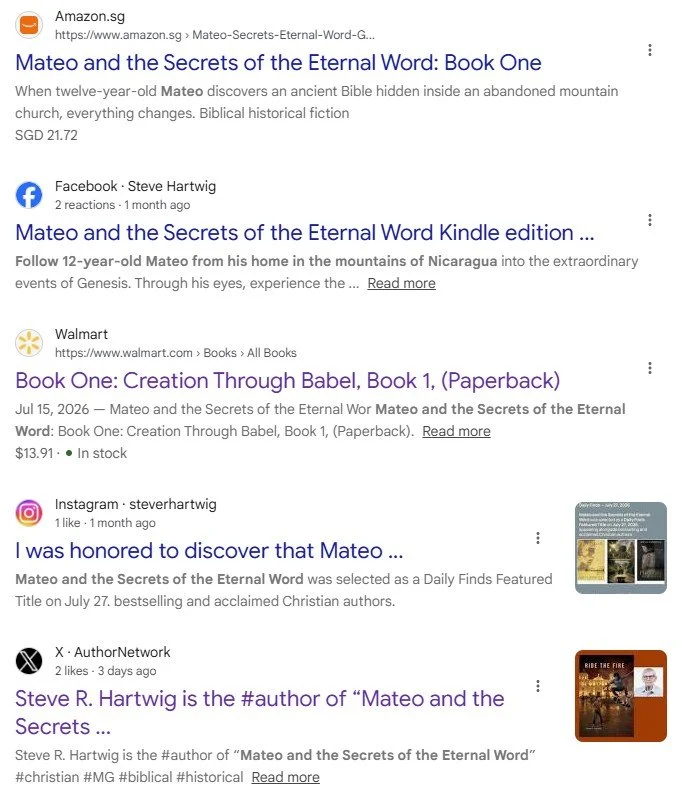
Searching for Mateo reveals the book appearing far beyond the places where I originally published and promoted it.
Mateo was listed with Bookshop.org.
Then ThriftBooks.
Then Walmart.
Walmart?
I hadn't put Mateo there.
So, naturally, I kept looking.
On the next page, I began finding Amazon listings from different countries around the world. Then came booksellers in Italy. Another in Denmark. There were names I had never heard of and places where I certainly had never submitted my book.
Some listings didn't even have the cover yet.
But they had Mateo.
The little boy from the mountains of Nicaragua was apparently traveling quite nicely without me.
What About Ride the Fire?
For good measure, I decided to search for Ride the Fire too.
I had noticed before that searching that title alone on Amazon brings up several books with the same name. So this time I refined the search:
Ride the Fire by Steve R. Hartwig.
The results were much the same.
There it was, appearing in places well beyond my website, Amazon author page, and social media posts.
Another one of my books had made its way out into the world.
And Then Mateo Had One More Surprise
I thought I had finished my little investigation.
Apparently Mateo hadn't.
While looking around Amazon, I discovered something I had completely missed.
Amazon has a Hot New Releases list for Teen & Young Adult Christian Friendship Fiction.
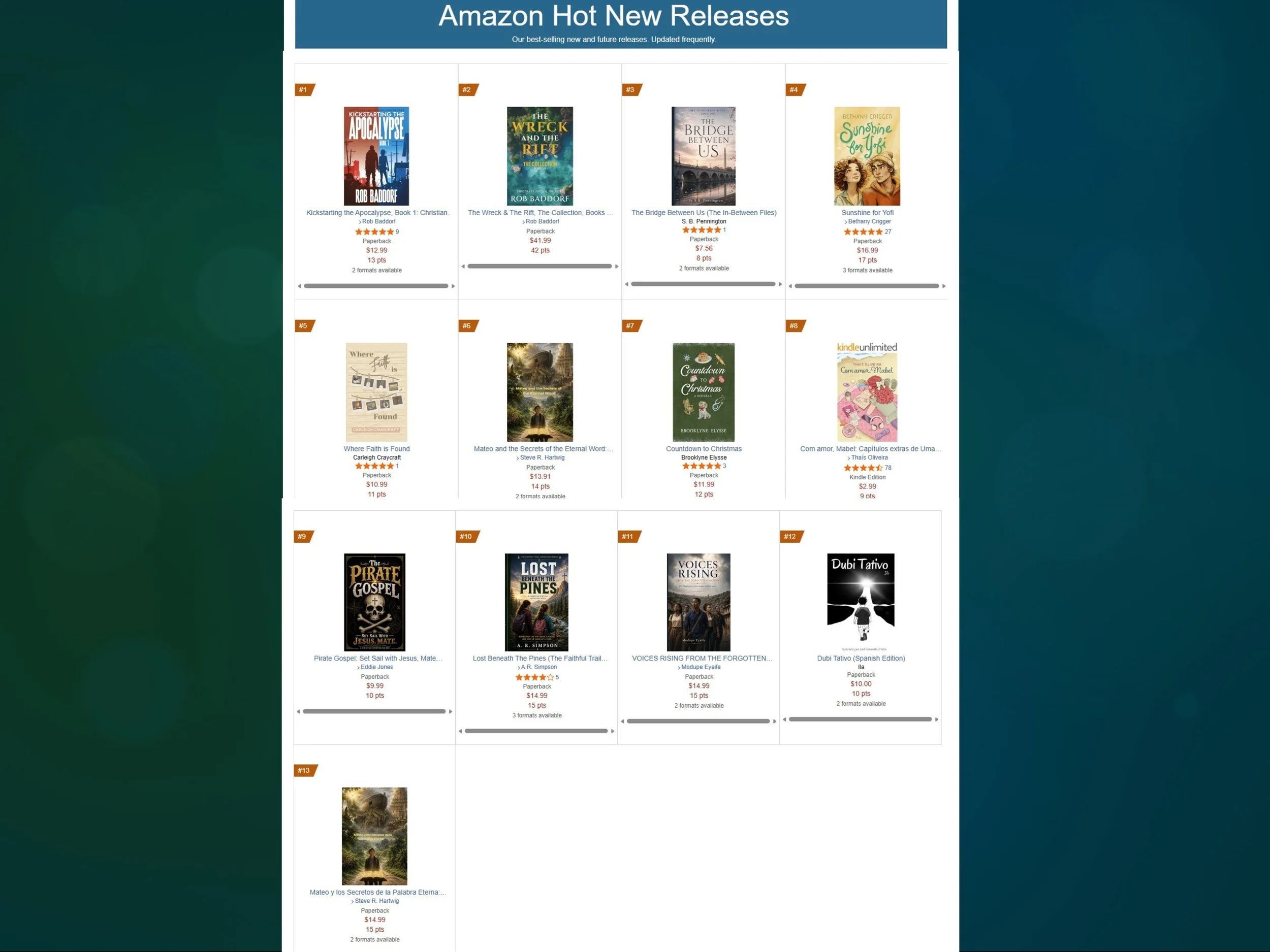
Both editions of Mateo appeared on Amazon's Hot New Releases list—English at #6 and Spanish at #13.
And sitting there at #6 was Mateo and the Secrets of the Eternal Word.
I had to look twice.
Then I discovered the Spanish edition, Mateo y los Secretos de la Palabra Eterna, on the same list at #13.
Now, Amazon rankings change constantly. A Hot New Release ranking today can be different tomorrow, and I certainly don't mistake a retailer listing or a ranking for thousands of books being sold.
But that wasn't really the point.
The point was much simpler.
Mateo was there.
After Many Days
So my little vanity check proved something to me.
My books can be found.
Not just in a few of my own social media posts. Not just on my website. Not just in the places where I personally put them.
They are showing up in searches, on bookselling sites, and in countries around the world.
A couple of weeks ago, I wrote about the question every new author eventually asks:
Would anyone read it?
Someone did.
And now I've discovered something else.
Once you release a story into the world, you don't always know where it will go.
Maybe that's one reason the words from Ecclesiastes that I used last week seem even more meaningful to me now:
Cast thy bread upon the waters: for thou shalt find it after many days.
I cast four stories onto the water.
Every now and then, apparently, Google lets me peek over the edge and see where a few of them have floated.
And as for Mateo?
I'm beginning to wonder where he'll turn up next. 😊
Who Is Verbum Aeternum?
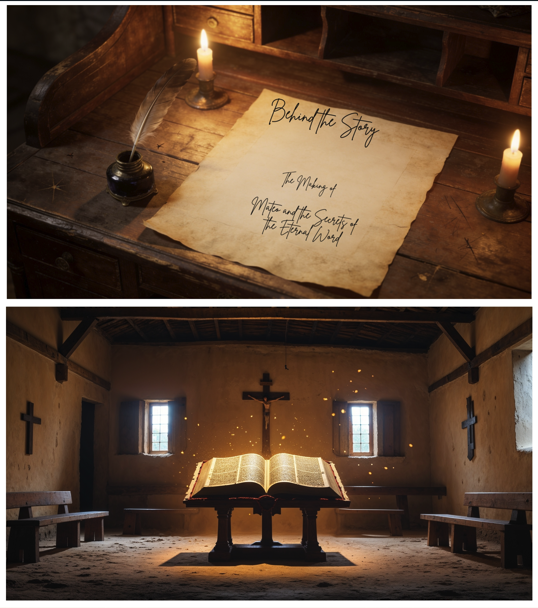
When I began writing Mateo and the Secrets of the Eternal Word, I knew I had a problem to solve.
I wanted Mateo to experience the great stories of the Bible.
Not simply read about them.
Not dream about them.
Experience them.
He needed to stand in the Garden of Eden.
He needed to hear the rain fall on Noah's Ark.
He needed to walk among the people building the Tower of Babel.
Somehow, a twelve-year-old boy living in the mountains of Nicaragua had to cross thousands of years of history.
I needed a doorway.
That doorway became Verbum Aeternum.
The Eternal Word
Verbum Aeternum is Latin.
It means The Eternal Word.
In Mateo's world, it is an enormous, ancient Bible resting inside an abandoned church in the mountains near his home.
Father Tomás watches over it.
Doña Rosa knows about it.
And somehow, both of them seem to understand far more about the book than Mateo does.
But Verbum Aeternum is not simply an old Bible.
Mateo discovers that when he asks a question.
Not just any question.
A question Verbum seems to have been waiting for Mateo to ask.
And when he finally asks it, everything changes.
The church disappears.
The mountains of Nicaragua disappear.
And when the world becomes clear again, Mateo is somewhere—and sometime—else.
The words of Scripture are no longer words on a page.
They are happening around him.
Where Did Verbum Come From?
Once I created Verbum Aeternum, another question appeared.
How could such a book exist?
I didn't want it simply to appear in an old church without a history of its own.
If Verbum had been waiting there for Mateo, then someone had to place it there.
Someone had to protect it.
And long before Mateo was born, someone had to create it.
That question eventually became a story of its own.
I began imagining another time, another place, and people who understood that the book they were creating was unlike any other.
A book meant to survive.
A book meant to be guarded.
A book meant to wait.
Exactly what happened during those years—and how Verbum eventually found its way to a forgotten church in the mountains of Nicaragua—is part of the mystery that surrounds it.
Some secrets are better revealed slowly.
A Book That Chooses?
At first, Mateo might believe his journeys simply happen to him.
But gradually, it becomes difficult to believe there is anything accidental about them.
Mateo cannot simply open the book and decide where he wants to go.
In the beginning, it starts with a question.
And from the beginning, there is the unsettling sense that Verbum already knew the question was coming.
Perhaps it had been waiting for it.
Perhaps it had been waiting for Mateo.
Father Tomás doesn't seem surprised by what happens to him.
Neither does Doña Rosa.
Both guide Mateo.
Both help him understand what he has witnessed.
And both seem to know there are questions Mateo isn't ready to have answered.
Yet.
More Than a Doorway
It would have been easy to make Verbum nothing more than the device that sends Mateo into Bible history.
Ask a question.
Travel through time.
Have an adventure.
Come home.
But somewhere along the way, Verbum became more than that.
The questions matter.
But perhaps the questions aren't really in control.
Verbum doesn't simply take Mateo somewhere.
It takes him where he needs to go.
And as Mateo's journeys continue, something else begins to emerge.
These aren't merely isolated Bible stories.
They are the lives of people.
One life leads to another.
One generation leads to the next.
And Mateo is being allowed to follow them.
He doesn't choose the destination.
He doesn't decide whose story comes next.
Verbum does.
Why?
That is one of the questions at the heart of the series.
So, Who Is Verbum Aeternum?
Perhaps that's the wrong question.
What is Verbum Aeternum?
An ancient Bible?
A doorway through time?
A witness to history?
Something created for a purpose that began long before Mateo was born?
Or something that has been waiting a very long time for one particular twelve-year-old boy?
Mateo doesn't know.
Father Tomás isn't telling.
Doña Rosa certainly isn't telling.
And Verbum?
For now, Verbum isn't telling either.
Someone Read It
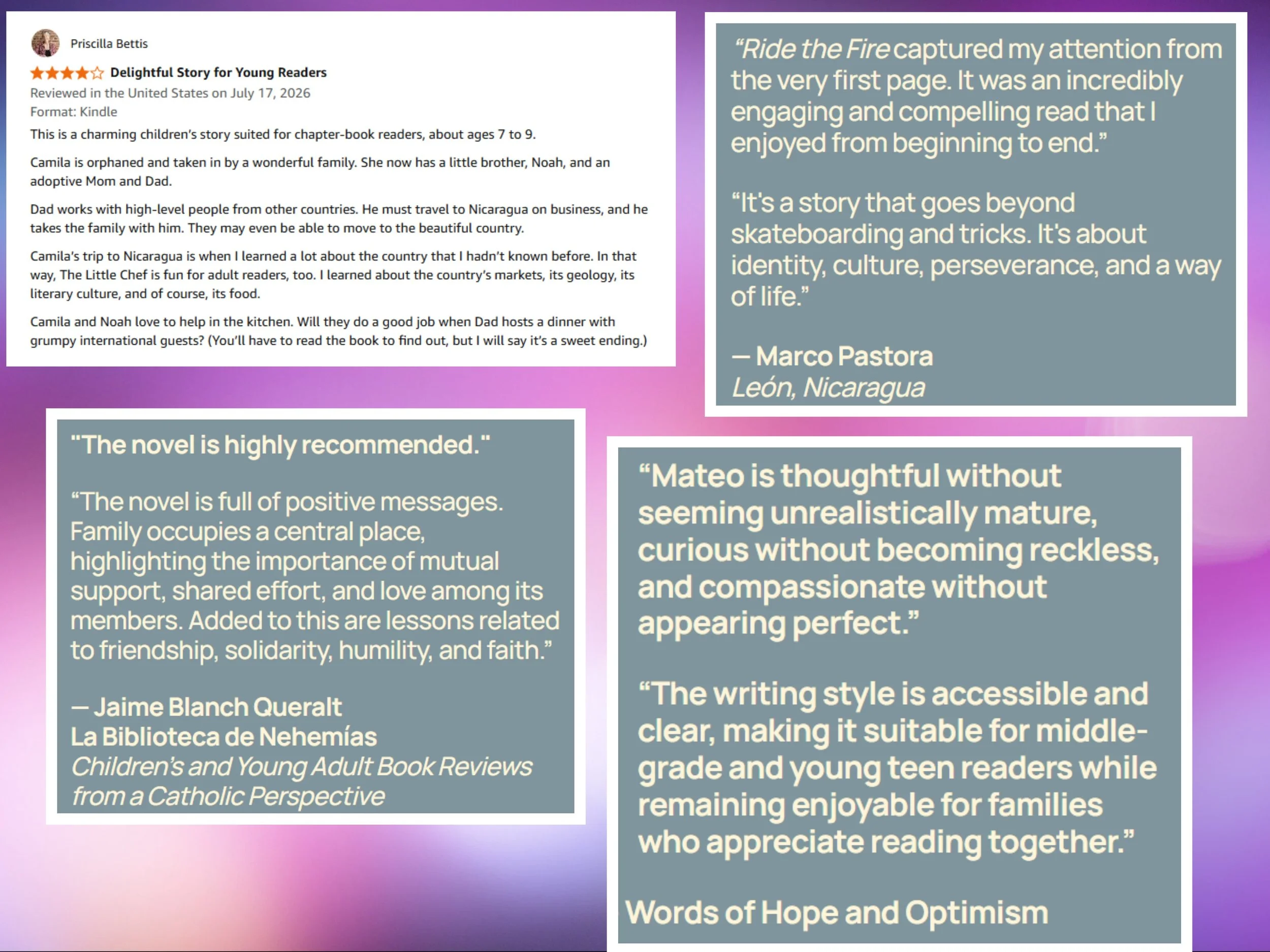
The question every new author asks eventually received an answer. Someone read the stories—and took the time to share what they found in them.
Cast thy bread upon the waters: for thou shalt find it after many days. — Ecclesiastes 11:1 KJV
Last week, I ended with a question every new author eventually has to face.
I wrote the book, but would anyone read it?
There was only one way to find out.
I had to let it go.
That may sound simple.
It wasn't.
Writing a book is a very private experience. For months, the characters belong to you. Their conversations happen inside your head. You decide where they go, what they say, and what happens next.
Then one day, the book is finished.
And suddenly those characters don't belong only to you anymore.
You put the book into someone else's hands.
And wait.
The First Reader
There is something different about having a friend or family member read your book.
You hope they'll like it.
You may even believe them when they tell you they do.
But somewhere in the back of your mind is a little voice saying:
Of course they said that. They know me.
What I really wanted to know was what would happen when someone who didn't know me opened the book.
Someone who had no reason to be kind.
No reason to finish it.
No reason to say anything at all.
Would the story work for them?
Would they care about the characters?
Would they keep turning the pages?
That was the test I couldn't give myself.
The Story Leaves Home
Eventually, it happened.
Someone read the book.
Then someone else did.
A comment appeared.
A review arrived.
Someone I had never met had spent hours with characters who, not so long before, had existed only in my imagination.
That was a strange feeling.
And a wonderful one.
Because they weren't responding to me.
They were responding to the story.
They noticed things.
They cared about characters.
Sometimes they saw something in the story that I hadn't even realized I had put there.
That may have been when I began to understand what happens after a writer finishes a book.
The story leaves home.
Not Everyone Will Love It
Of course, becoming an author also means learning something else.
Not everyone is going to love your book.
Some people won't be interested in it at all.
Some will begin and never finish.
Some may finish and decide it simply wasn't for them.
And that's okay.
A book doesn't have to be for everyone.
It only has to find the readers for whom it is.
That took me a while to understand.
One Reader at a Time
I used to think of readers as numbers.
How many books sold?
How many people visited the website?
How many reviews?
Those numbers still matter. Every author wants people to discover his books.
But I've learned that behind every number is a person.
One person picked up the book.
One person turned the first page.
One person decided to keep reading.
And sometimes, one of those people takes the time to tell you what the story meant to them.
That's when the numbers disappear.
There is simply an author on one side...
and a reader on the other.
Connected by a story.
The Question Changed
So the question I asked last week eventually received an answer.
Would anyone read it?
Yes.
Someone would.
And then another someone.
And another.
I couldn't know where the books would eventually travel, who would discover them, or what would come from any of it.
I still don't.
But perhaps that is part of being an author.
You write the best story you can.
You put it into the world.
And then you wait to see whose hands it finds.
Last week I asked:
Would anyone read it?
This week I had my answer.
Someone did.
And that was enough to make me wonder:
Who might be next?
Who Is Father Tomás?
When I began writing Mateo and the Secrets of the Eternal Word, I knew Mateo would witness extraordinary things.
He would stand in the Garden of Eden.
He would see Noah building the ark.
He would watch the Tower of Babel rise toward the sky.
But before Mateo could experience any of those things, something else had to happen.
He had to find Verbum Aeternum.
Or perhaps—
Verbum Aeternum had to find him.
And standing between the two was Father Tomás.
The Priest in the Mountains
Father Tomás cares for an old, abandoned church in the mountains near Mateo's home in Miraflor, Nicaragua.
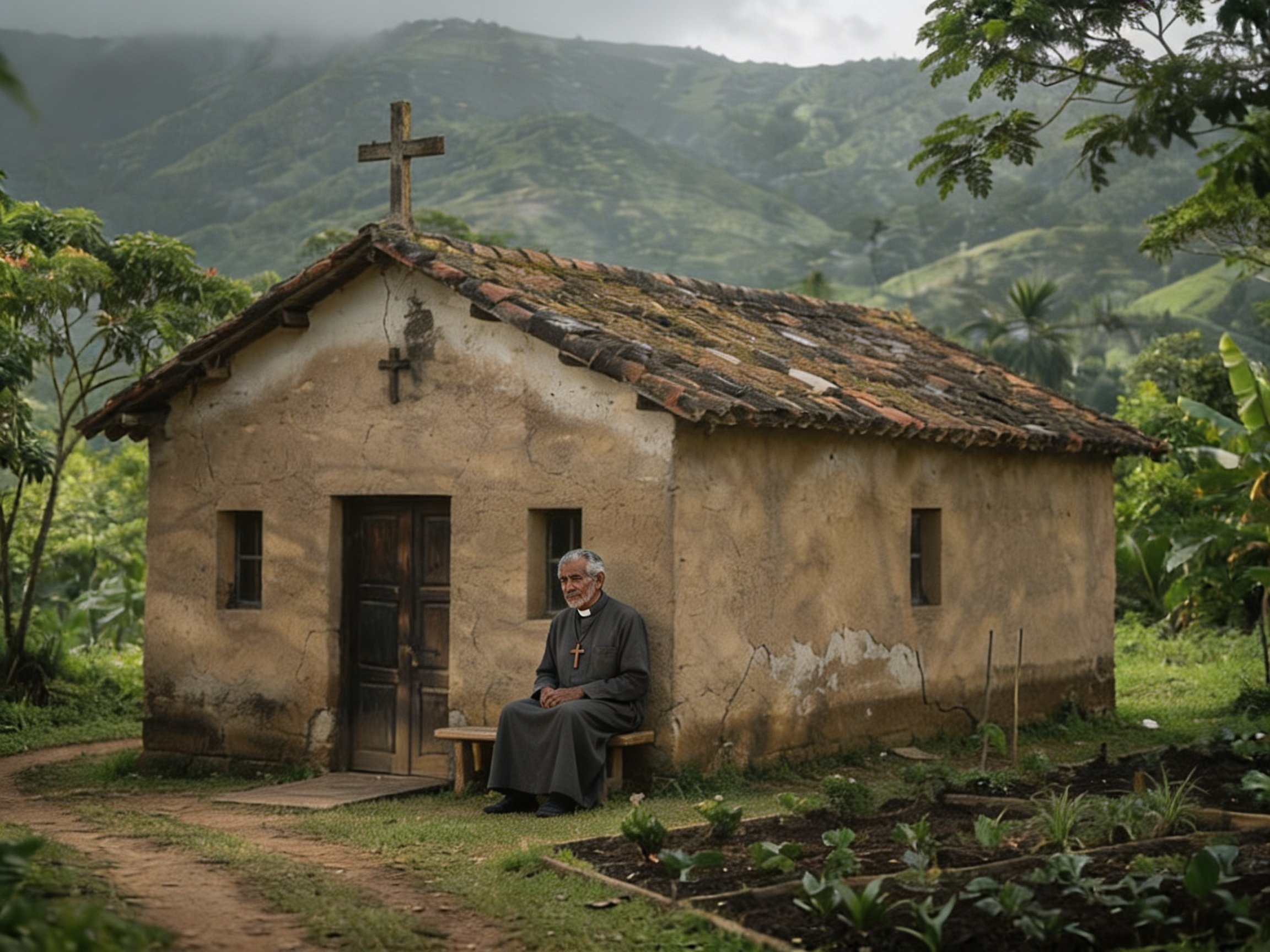
Father Tomás watches over the abandoned mountain church—and the ancient Bible hidden within it.
There is no congregation waiting for Sunday services.
No families filling the pews.
Father Tomás simply maintains the old building—and watches over what has been left inside it.
Among those things is Verbum Aeternum.
The enormous ancient Bible has been there for longer than Mateo can imagine.
Father Tomás knows it is there.
He knows what it is called.
He cares for it.
And somehow, he becomes the catalyst that brings a curious twelve-year-old boy and an ancient Bible together.
At first, that might seem like coincidence.
As the story continues, it becomes harder to believe that it was.
Why Mateo?
That question lies beneath much of Mateo and the Secrets of the Eternal Word.
Why Mateo?
Why would this particular boy be allowed to step through the pages of Scripture and witness events that happened thousands of years before he was born?
Mateo doesn't know.
The reader doesn't know.
And Father Tomás isn't saying.
That is where Father Tomás and Doña Rosa begin to share something.
Both seem to know more than they reveal.
Neither appears particularly surprised that something extraordinary is happening to Mateo.
And both seem, in ways Mateo does not yet understand, connected to whatever brought him to Verbum Aeternum in the first place.
Were they involved in Mateo's choosing?
That's a question I haven't answered.
Yet.
The One Mateo Comes Back To
After each journey, Mateo returns carrying more than memories.
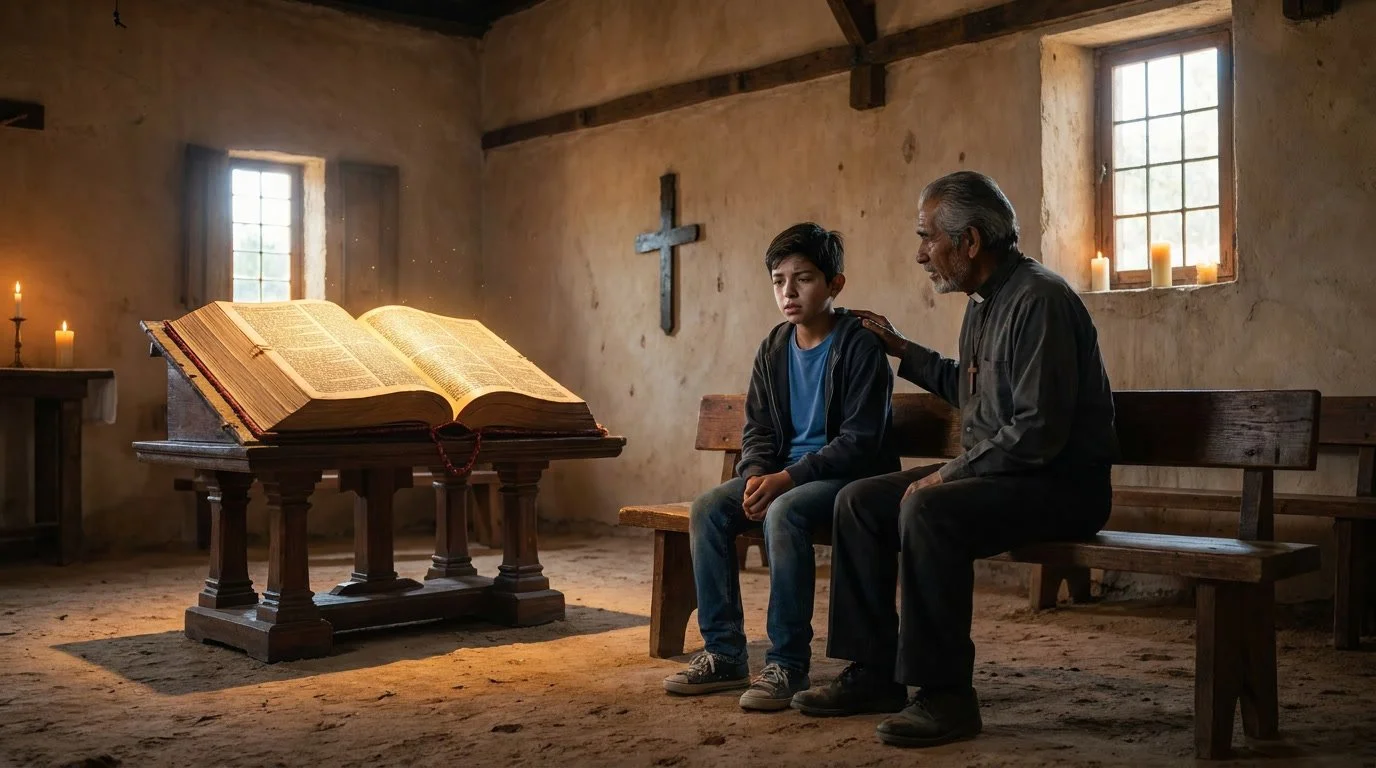
After every extraordinary journey, Mateo returns to Father Tomás with questions only the two of them can understand.
He carries questions.
He has seen the Bible in a way no one around him has.
He has watched familiar stories become real people, real places, and real choices.
And Father Tomás is the person he can talk to about them.
He listens.
He helps Mateo understand the Scripture behind what he has witnessed.
But there is an interesting difference between answering Mateo's questions about Genesis and answering his questions about Verbum Aeternum.
Father Tomás is much better at the first.
When the questions move toward the ancient Bible itself—and why it chose Mateo—the answers become less certain.
Or perhaps simply less forthcoming.
How Much Does He Know?
That may be the more interesting question.
Father Tomás is not surprised by Verbum Aeternum.
He knows the book.
He knows its name.
He knows its history—or at least some of it.
And he knows Doña Rosa.
There are connections here that Mateo has not yet discovered.
Connections that I have deliberately allowed to remain just beyond his reach.
For now, Father Tomás is his priest, his teacher, and his friend.
He is the man Mateo trusts enough to tell the impossible:
“I was there.”
And Father Tomás believes him.
Perhaps because he has faith in Mateo.
Perhaps because he has faith in God.
Or perhaps because, long before Mateo understood what was happening...
Father Tomás already knew something was coming.
I Wrote the Book, but Would Anyone Read It?
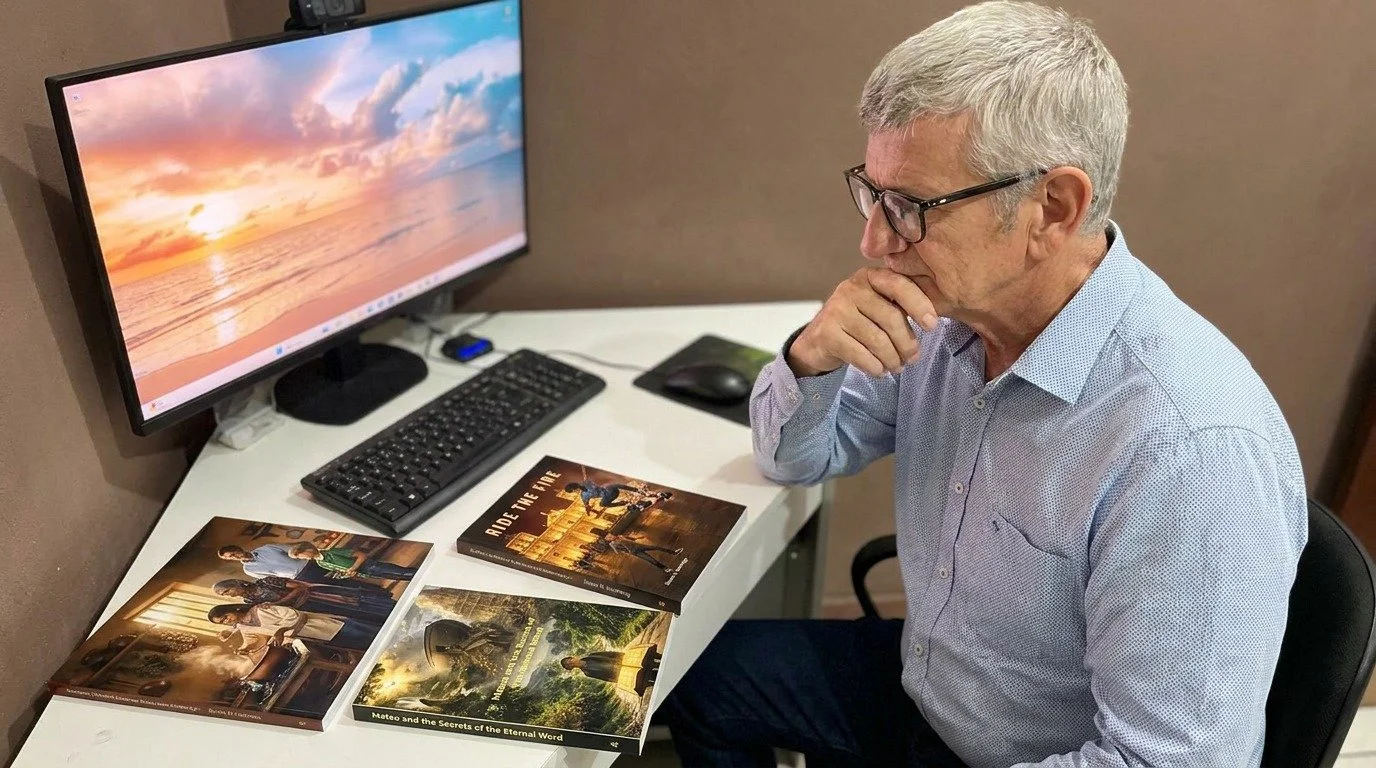
Steve R. Hartwig looks over his books and considers the question every author eventually faces: Once the book is written, will anyone read it?
Commit thy works unto the LORD, and thy thoughts shall be established. — Proverbs 16:3 (KJV)
I had written the books. Now came the harder question.
Last week, I wrote about the moment I realized something had changed.
I had become an author.
There were books with my name on the cover. Stories that had once existed only in my imagination could now be held in someone's hands.
That should have been the end of the story.
It wasn't.
Because after you write a book, another question eventually arrives.
Will anyone read it?
Writing had been something I could do largely by myself.
Finding readers was different.
I knew very little about marketing books. I didn't have a publishing company introducing me to bookstores or reviewers. I didn't have a large audience waiting for my next release.
I was simply an author living in León, Nicaragua, with some books I believed in.
So I began learning.
One Reader at a Time
At first, finding readers wasn't about advertising campaigns or sales numbers.
It was much more personal than that.
I gave books to people.
I put copies into the hands of friends.
Some found their way to young people I knew through the skatepark.
Others traveled farther than I expected.
And then something wonderful began happening.
People actually read them.
Not thousands.
Not hundreds.
Sometimes just one.
But I began discovering that one reader matters.
A book sitting on my computer was my story.
A book being read by someone else had become something more.
Then Came the First Responses
Someone would tell me what they liked.
Someone would mention a character.
Someone would notice something in the story that I hadn't expected them to notice.
And occasionally, someone would write a review.
Those moments changed the way I thought about writing.
A review wasn't simply a collection of stars beside a book title.
It meant somebody had spent hours inside a world I had created.
They had met my characters.
They had followed them through their struggles.
And when they reached the last page, the story had mattered enough that they wanted to say something about it.
That is a remarkable gift to an author.
And Then Came Mateo
By the time Mateo and the Secrets of the Eternal Word was ready to leave my computer, I understood something I hadn't understood when I finished my first book.
Publishing the book wasn't the finish line.
It was another beginning.
Now I had to help Mateo find his readers.
And so another education began.
Websites. Blogs. Social media. Reviewers. Author pages. Book sites. Promotions.
Some things worked.
Some didn't.
Some produced surprises.
And quite a few taught me what not to do again. 😊
But slowly, Mateo began traveling beyond Nicaragua.
People I had never met began seeing his name.
A few began reading his story.
And each time that happened, the circle grew just a little wider.
Maybe That's How Books Find Their Way
I'm still learning how all of this works.
I suspect I will be for quite some time.
But I've begun to think that perhaps finding readers isn't always about reaching the largest number of people.
Maybe it's about reaching the right person.
One reader tells another.
One review introduces a book to someone new.
One social-media post reaches somebody who would never have known the book existed.
One copy gets passed from one pair of hands to another.
And somewhere along the way, a story that began quietly in one person's imagination develops a life of its own.
I had become an author.
Now I was learning what came next.
I was learning how to find my readers.
Who Is Doña Rosa?
When I began creating Mateo, I knew he couldn't exist by himself.
He needed a family.
He needed a home.
And somewhere in that home, I knew there needed to be a grandmother.
Her name became Doña Rosa.
At first, that was all she was meant to be.
Mateo's grandmother.
But characters don't always remain what you intended them to be.
Doña Rosa certainly didn't.
As Mateo and the Secrets of the Eternal Word began to take shape, I realized there was something different about her.
She knew things.
Or perhaps it would be more accurate to say—
she seemed to know things.
She Wasn't Surprised
Imagine being twelve years old and trying to explain that an ancient Bible hidden inside an abandoned mountain church had somehow carried you thousands of years into the past.
That you had seen the Garden of Eden.
That you had watched Noah build the ark.
That you had stood among the people of Babel.
Most grandmothers might have a few questions.
Doña Rosa does too.
But there is something unusual about hers.
She isn't shocked.
She doesn't dismiss Mateo's stories as dreams or a child's imagination.
Instead, she listens.
Carefully.
Sometimes she asks a question that helps Mateo understand something he hadn't understood himself.
And sometimes—
she says almost nothing at all.
That silence began to intrigue me.
Because eventually I found myself asking the same question I hope readers ask:
What does Doña Rosa know?
Was Mateo Really Chosen by Accident?
Mateo discovers the Verbum Aeternum in an abandoned church in the mountains of Miraflor.
At first, it appears that he simply stumbled upon something extraordinary.
But did he?
As the story develops, there are hints that Mateo's connection to the ancient Bible may not be an accident.
And somehow, Doña Rosa seems connected to that mystery.
She never sits Mateo down and explains everything.
She never says, I know why this is happening to you.
That would be much too easy.
Instead, she guides him.
She helps him think about what he has witnessed.
She seems to understand that Mateo isn't being sent into the past merely to see biblical history.
He is being sent there to learn from it.
And every once in a while, Doña Rosa says or does something that raises another question.
Does she know why Mateo was chosen?
Perhaps.
But if she does, she isn't telling him.
Not yet.
Finding Doña Rosa
Just as I had to discover what Mateo looked like, I had to discover Doña Rosa.
I knew she should look Nicaraguan.
But I wanted something else in her face.
Warmth, certainly.
Strength.
Wisdom.
But also something difficult to define.
The expression of someone who might know a secret—
and has decided that you aren't quite ready to hear it.
I went through different versions until eventually I looked at one and thought:
There she is.
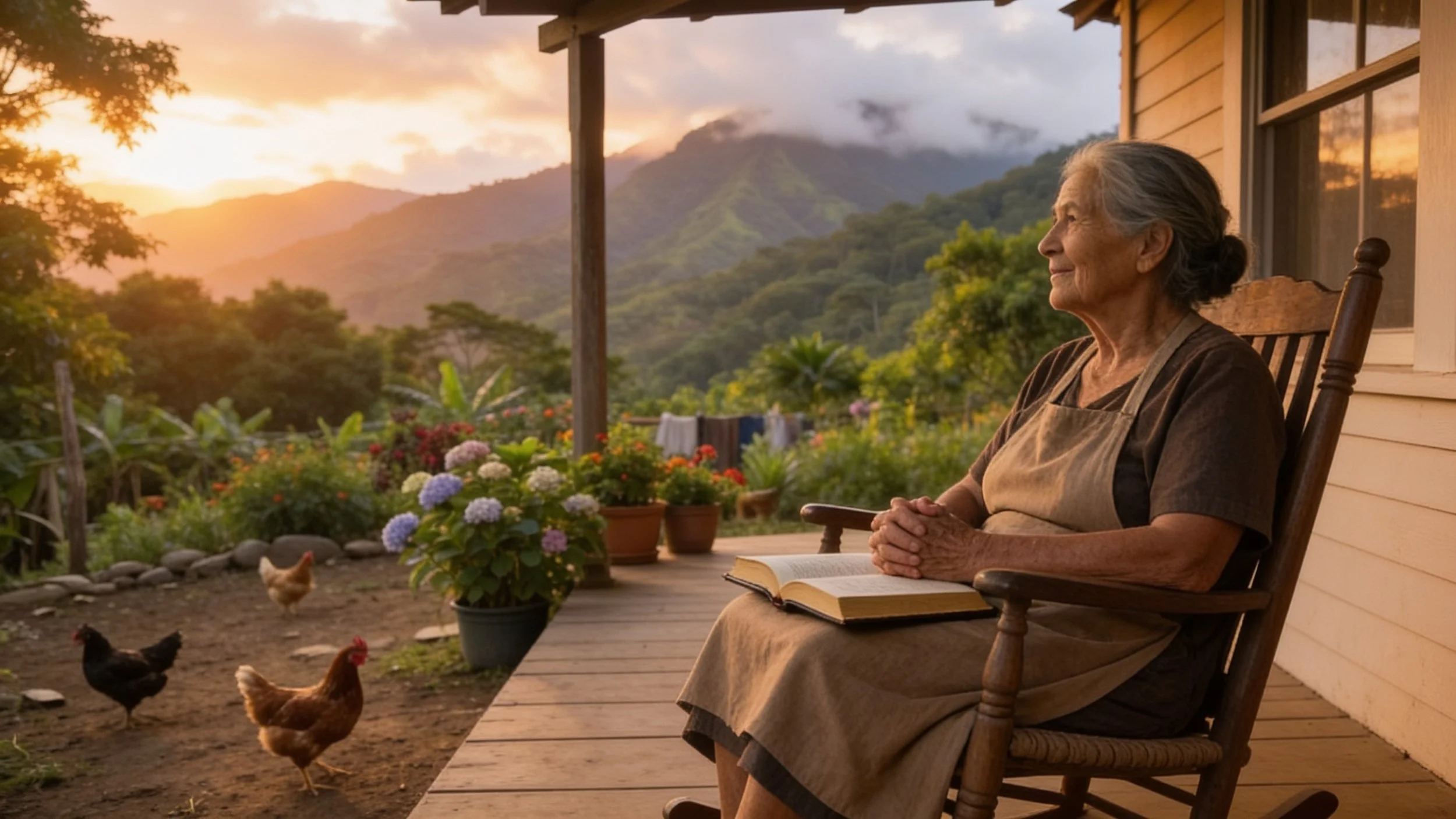
Doña Rosa on the porch in Miraflor—watching, listening, and perhaps knowing more than she says.
Doña Rosa.
Doña Rosa watches over Mateo with the quiet wisdom of someone who may understand far more than she reveals.
The Person Mateo Comes Home To
Mateo's journeys take him into some of the greatest stories ever told.
Creation.
The Flood.
Babel.
And now, as his journey continues, Abraham.
But eventually Mateo always comes home.
Back to Nicaragua.
Back to Miraflor.
Back to Doña Rosa.
And that may be more important than it first appears.
Because Doña Rosa doesn't simply comfort Mateo after his journeys.
She helps him understand why they matter.
She listens to what he saw.
She notices what he missed.
She occasionally nudges him toward questions he hasn't thought to ask.
And all the while, one larger question remains unanswered.
Mateo may be traveling through the Verbum Aeternum.
But Doña Rosa seems to know something about the journey that Mateo doesn't.
Perhaps even something about why it is Mateo making the journey in the first place.
For now, she isn't telling.
And I think we'll let her keep her secret a little longer.
I Had Become an Author
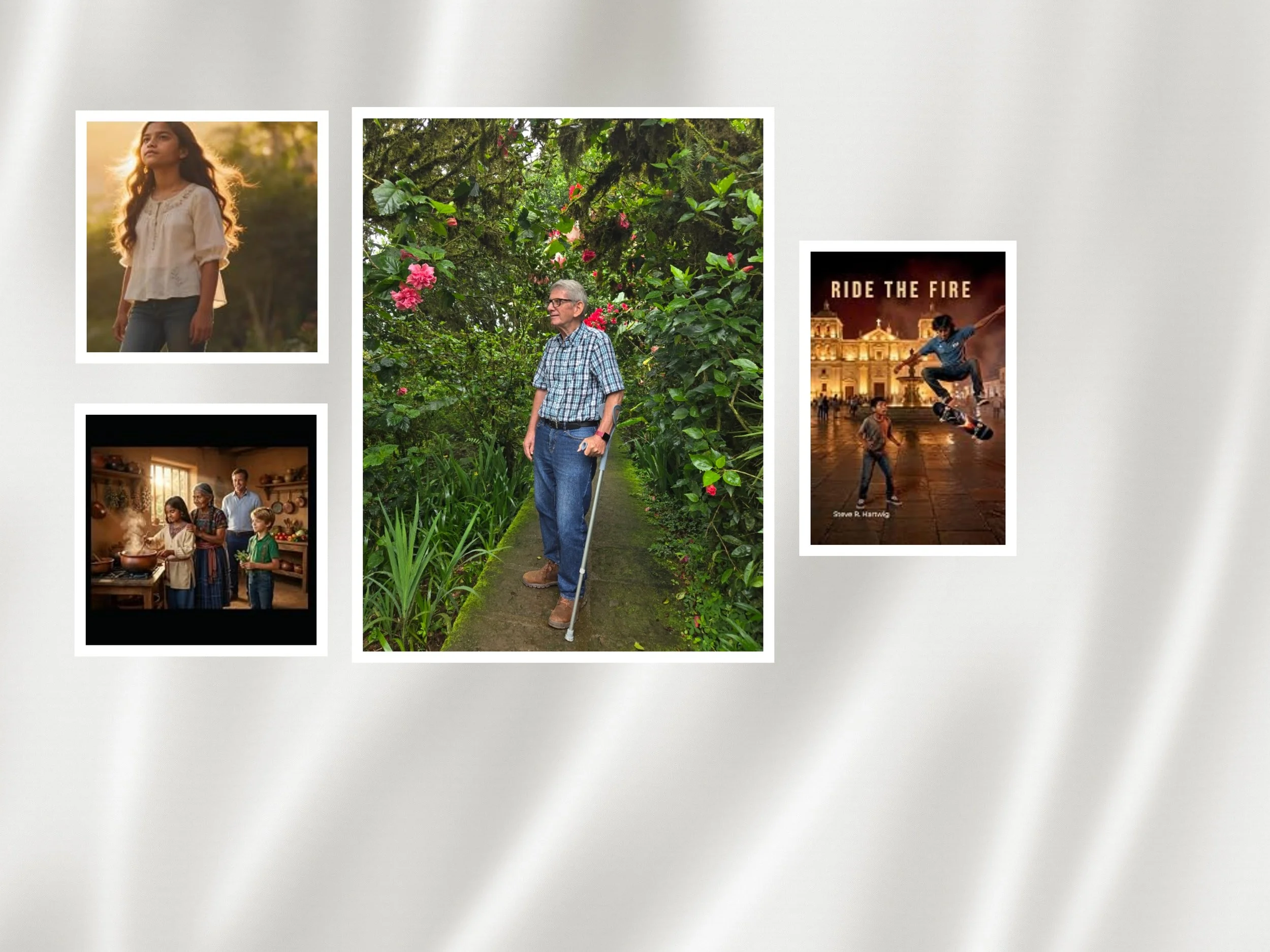
Books and moments from Steve R. Hartwig’s unexpected journey from writing his first story to becoming an author in Nicaragua.
And let the beauty of the LORD our God be upon us: and establish thou the work of our hands upon us; yea, the work of our hands establish thou it. — Psalm 90:17 (KJV)
For a long time, I thought of writing as something that had simply happened to me.
It certainly wasn't planned.
Brandy didn't give me an idea for a book.
She caused me to break my leg.
And somehow, from the weeks that followed, The Little Chef was born.
At first, that was enough.
I had written a book.
Then came The Challenge of the Heart.
And eventually, I began looking at the young people, friendships, and experiences around me differently.
I realized there was another story waiting to be told.
That story became Ride the Fire.
Three books.
I had never planned any of them.
But somewhere along the way, something had changed.
I had become an author.
That realization didn't arrive with a ceremony or a particular moment.
There was no day when I sat down and decided, From now on, I am an author.
It happened gradually.
Writing had begun to change the way I looked at the world around me.
A conversation could become the beginning of a scene.
A friendship could reveal something about a character.
A place I had passed many times could suddenly become a setting.
An ordinary moment could make me wonder:
Is there a story here?
That may have been the biggest change of all.
The world around me hadn't changed.
The way I looked at it had.
I began paying more attention.
I listened more closely to conversations.
I noticed the little things people did.
I thought about why someone reacted one way instead of another.
I began to understand that stories aren't always waiting somewhere far away.
Sometimes they are sitting beside us.
Sometimes they are found in people we already know.
Sometimes they are hidden in experiences we have already lived.
And sometimes we don't recognize them until we learn how to look.
Perhaps that is part of what becoming an author meant for me.
It wasn't simply learning how to put words on a page.
It was learning to see.
Looking back, the words of Psalm 90:17 seem especially meaningful:
“Establish thou the work of our hands.”
I hadn't asked God to make me an author.
I hadn't mapped out a writing career.
I certainly hadn't imagined that a broken leg would have anything to do with it.
I simply took one step.
Then another.
One book became two.
Two became three.
And somewhere along that unexpected road, what had begun as something to do while I recovered had become something much more.
There were still stories I hadn't discovered.
Characters I hadn't met.
Places I hadn't imagined.
I didn't know what the next story would be.
But for the first time, I knew something else.
I would be looking for it.
Who Is Mateo
When I finished writing Ride the Fire, I knew what I wanted my next novel to be about.
I wanted to bring the great stories of the Bible to life for young readers.
Not simply by retelling them.
Those stories have been told beautifully for generations.
I wanted readers to experience them.
To stand beside Noah as the ark took shape.
To walk the streets of Babel.
To witness the moments that changed history through the eyes of someone who was there.
But that raised a much bigger question.
Who would tell the story?
Not Noah.
Not Abraham.
Not one of the familiar names every reader already knows.
I needed someone who would discover these events just as today's readers would discover them.
Someone who could ask questions.
Someone who could wonder.
Someone who could laugh, make mistakes, and grow.
Someone young enough that middle-grade readers could see themselves in him.
For a long time, I didn't know who that person was.
I knew the adventures.
I knew the places.
I even knew that the story would unfold in Nicaragua.
But I still hadn't met the boy who would lead readers through it all.
Then, little by little, he began to take shape.
Not all at once.
First came his curiosity.
Then his love of adventure.
Then I began to think about where he lived, the people around him, and the family who would shape his life.
But there was something else.
What would he look like?
If this story was going to be set in Nicaragua, I didn't want Mateo to simply be a generic boy.
I wanted him to look like a boy you might actually meet in a village like Miraflor.
So I began creating images.
One after another.
Some were close.
Some weren't.
Each one helped me understand him a little better.
Then one day, I looked at a new image and stopped.
"That's him."
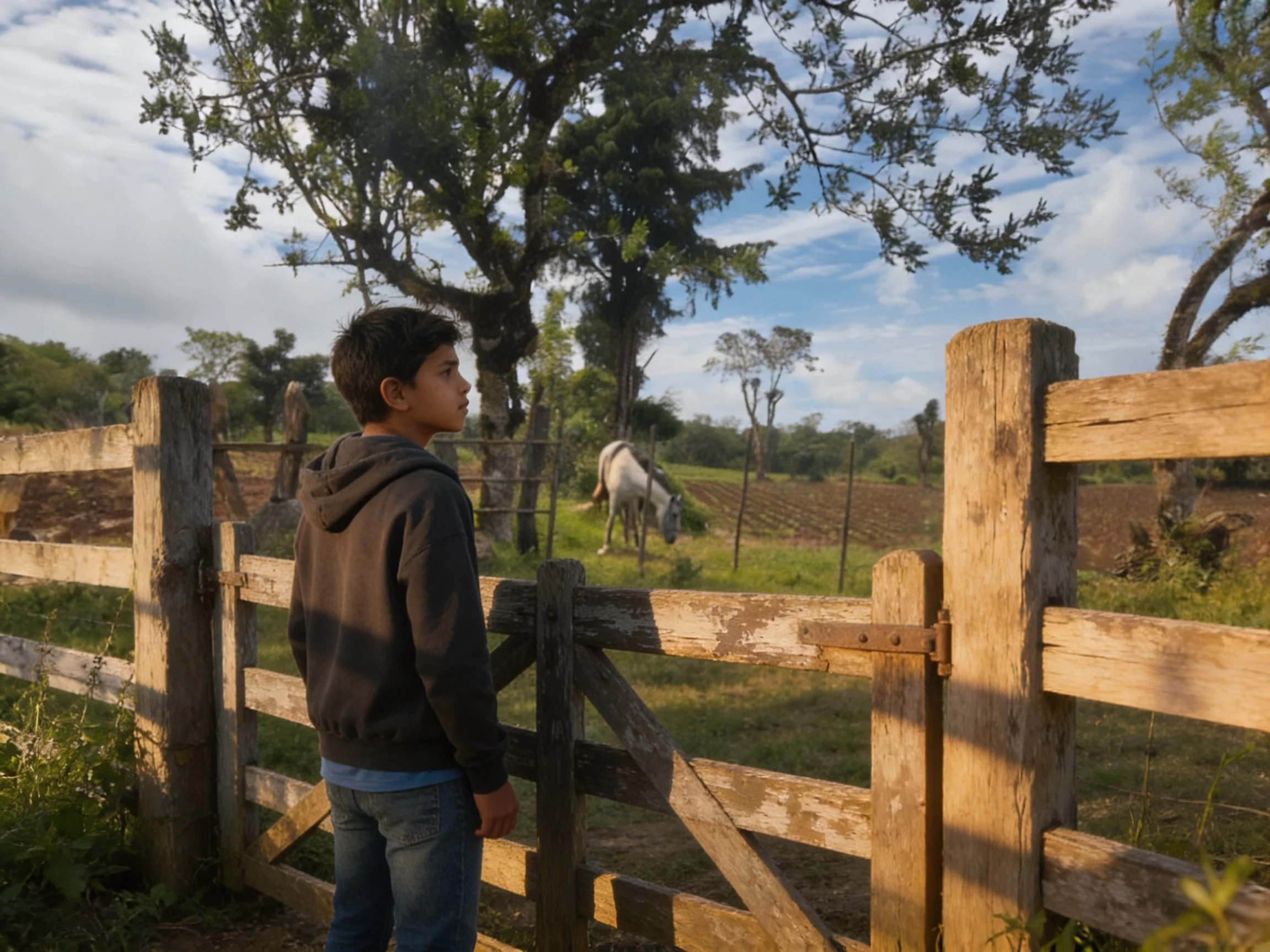
Mateo looks toward the mountains from his family farm.
For the first time, I wasn't looking at a character concept anymore.
I was looking at Mateo.
From that moment on, writing became different.
I could see him walking the mountain trails.
I could picture him standing beside the ancient Bible in the old church.
I could imagine the expressions on his face as he witnessed the great moments of Scripture.
He had finally become real.
Once I knew who Mateo was, the rest of the story began to breathe.
He wasn't there to replace the heroes of Scripture.
He was there to stand quietly beside them.
To see what they saw.
To learn what they learned.
And to invite young readers to discover those same timeless truths with him.
In next week's Behind the Story, I'll introduce you to another very important member of Mateo's world—a wise grandmother named Doña Rosa, whose love, faith, and quiet wisdom help guide a young boy through experiences unlike anything he could have imagined.
When the Story Is Not Yours Alone
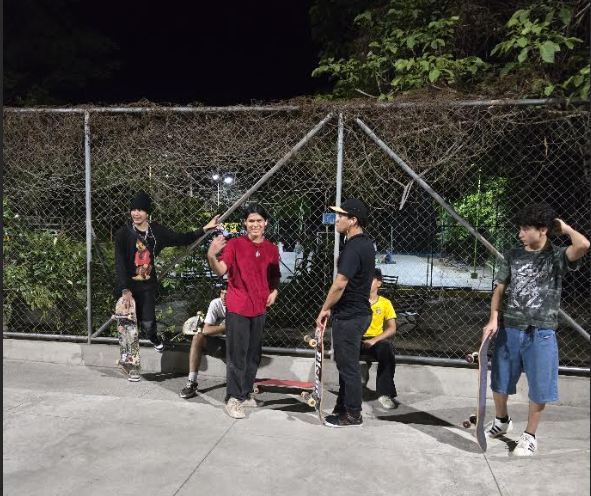
Friendships at the León skatepark. Before I could write their story, I first needed to listen.
Let every man be swift to hear, slow to speak, slow to wrath. — James 1:19 (KJV)
Once I recognized that the story for my third book had been in front of me all along, another realization quickly followed.
This story did not belong only to me.
The young men who helped create León’s skateboarding community had lived it. They had found ways to skate when equipment was difficult to obtain and safe places to practice were almost nonexistent. They had shared boards, built ramps, encouraged one another, and kept going when it would have been easier to quit.
I had been fortunate enough to become their friend.
But friendship did not automatically give me the right to tell their story however I pleased.
If I was going to write Ride the Fire, I needed to listen.
That sounds simple, but listening is different from merely hearing.
Hearing gathers facts.
Listening tries to understand what those facts meant to the people who experienced them.
I needed to learn more than where they skated or how they found their first boards. I needed to understand what drew them together, what obstacles they faced, and why the community they created mattered so deeply to them.
Their experiences would inspire the novel, but I did not want to take their lives and simply turn them into convenient pieces of fiction.
I wanted to honor them.
That meant asking questions.
It meant hearing different memories of the same years.
It meant recognizing that no single person sees an entire story.
And sometimes, it meant setting aside what I thought I understood so that someone else could tell me what I had missed.
“Let every man be swift to hear, slow to speak, slow to wrath.”
— James 1:19 (KJV)
We often think of this verse as guidance for avoiding arguments. And it certainly is.
But I believe it also teaches us something about understanding people.
We cannot truly know another person’s story if we are always preparing our own response.
We cannot learn what shaped someone if we decide in advance what their experience must have been.
And we cannot honor people well if we speak for them before we have taken the time to listen to them.
This lesson extends far beyond writing.
Every person we meet carries memories, struggles, hopes, and experiences we cannot see from the outside.
We may notice what they do without understanding why they do it.
We may see where they are today without knowing the road that brought them there.
We may even believe we know someone well while still knowing only a small part of their story.
Writing Ride the Fire reminded me that listening is one of the greatest gifts we can offer another person.
Not listening so that we can correct them.
Not listening while waiting for our turn to speak.
Simply listening because their story matters.
The book may have carried my name on the cover.
But the story behind it belonged to a community.
My responsibility was to listen closely enough to tell it with care.
Which Came First… Mateo or Miraflor?
When readers discover Mateo and the Secrets of the Eternal Word, they often assume the story began with a young boy named Mateo. In reality, it began with a search for the perfect place to tell his story.
After finishing Ride the Fire, I knew my next novel would also be set in Nicaragua. But this time, I wanted a very different setting. Instead of a busy colonial city like León, I was looking for a quiet mountain community where faith, family, and everyday life could naturally blend with an extraordinary adventure.
As I searched, friends began telling me about the Miraflor Nature Reserve. The more I researched it, the more convinced I became that this was the place I had been looking for. Long before I ever visited, Miraflor had already become the home of Mateo, his family, and Father Tomás in my imagination.
Then something unexpected happened.
By the time I finally traveled to Miraflor, most of the novel had already been written.
Walking its mountain roads, seeing the farms, and meeting the people confirmed much of what I had imagined. But it also taught me a few things I hadn't fully understood from my research. Those discoveries led me to make small but important changes, not only to the story itself, but also to several of the illustrations.
The church in the novel remains fictional, but the mountains, gardens, and rural landscape surrounding it now better reflect the beauty of the real Miraflor. The same is true of Mateo's home, whose gardens and surrounding landscape were also refined after my visit. Visiting the reserve helped transform those settings from imagined places into locations inspired by firsthand experience.
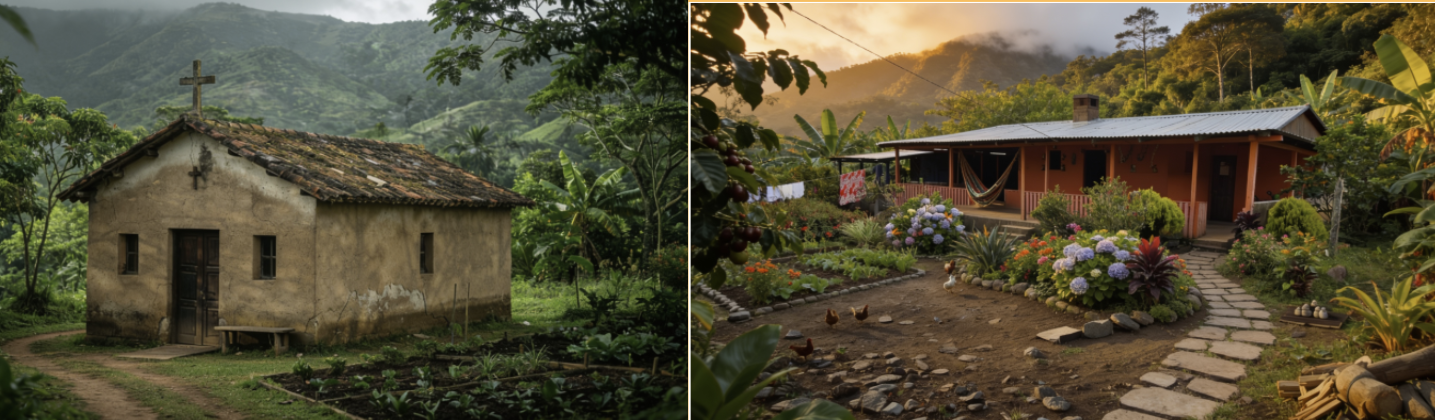
The fictional church of Father Tomás and Mateo's home were both reimagined after my visit to Miraflor, reflecting the landscapes that inspired the novel.
Looking back, I realize the answer to the question is simple.
Mateo became the heart of the story, but Miraflor gave that story a home.
Sometimes a story begins not with a character, but with a place that quietly waits to be discovered.
The Story That Was Already There
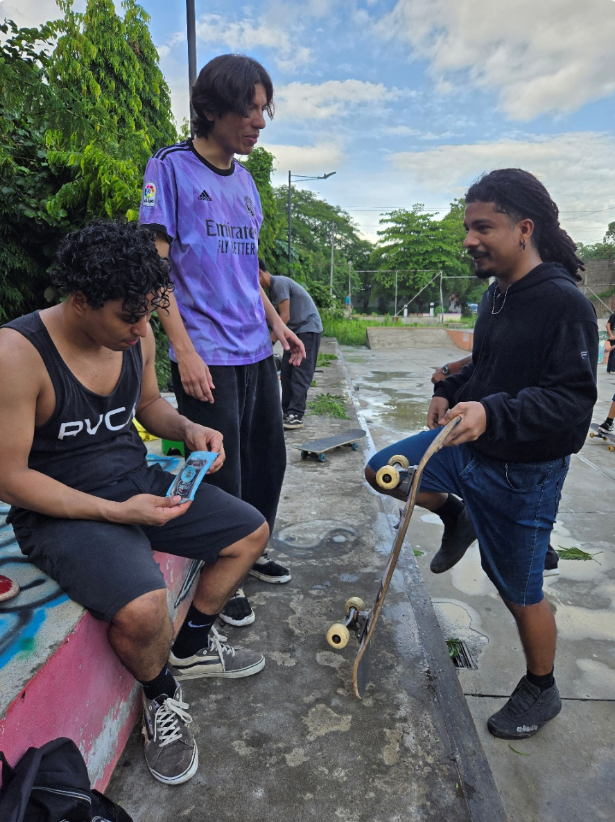
Skaters at the León skatepark in Nicaragua—friendships and everyday moments that would eventually help inspire Ride the Fire.
A man's heart deviseth his way: but the LORD directeth his steps. Proverbs 16:9 (KJV)
Two books were now behind me.
That was something I had never expected to be able to say.
The Little Chef had begun almost by accident. Brandy had given me the idea, and somewhere along the way, I discovered that I could actually take an idea and turn it into a book.
Challenge of the Heart was different. This time, I had made the deliberate decision to write again. Finishing that second book proved something to me.
The first one had not been a fluke.
But now I faced the question again.
Would there be another book?
And if there was, what would I write about?
I could have simply invented another story. There were certainly plenty of possibilities. But something had changed. I wanted the next book to mean something more to me personally.
The answer, as it turned out, had been around me for years.
I have lived in León, Nicaragua, for many years. During that time, I became friends with a number of young men who shared a passion for something I knew very little about when I first met them.
Skateboarding.
I had watched them skate through the streets of León. I had listened to their stories. I learned how difficult it had been for the first generation of skaters in a city where skateboards, equipment, and places to skate were not easy to find.
They shared boards.
They built their own ramps.
They fell, got back up, and tried again.
And somewhere along the way, they built something much bigger than a place to skateboard.
They built a community.
I had known these young men for years. Some had become good friends. I knew their struggles, their determination, and something of the history they had created.
Yet I had never thought of any of it as a book.
Sometimes we search for what comes next while overlooking what God has already placed around us.
We expect the answer to arrive as some dramatic new idea. We look ahead, wondering what door will open next, while perhaps failing to notice the people, experiences, and relationships that are already part of our lives.
That was what happened to me.
The story I was looking for wasn't somewhere in the distance.
It was already there.
I simply needed to recognize it.
That realization eventually became my third book, Ride the Fire.
But looking back, I think there was another lesson waiting for me in the process.
“A man's heart deviseth his way: but the LORD directeth his steps.”
— Proverbs 16:9 (KJV)
God doesn't always have to bring something new into our lives in order to lead us somewhere new.
Sometimes He asks us to look again at what He has already given us.
A friendship.
An experience.
A talent we haven't used.
A person whose story deserves to be heard.
An opportunity we once considered ordinary.
We may be asking God, “What's next?”
Perhaps sometimes His answer is:
“Look at what is already in front of you.”
From Ride the Fire to Mateo
When I finished writing my third book, Ride the Fire, which takes place in my beloved León, Nicaragua, I felt a deep sense of satisfaction. I had not only told the story of my skateboarding friends, but also the story of a city and close-knit community that had become part of my own life.
While waiting for Amazon to publish the book, I found myself asking a simple question: What story comes next?
Once I settled on the basic premise for Mateo and the Secrets of the Eternal Word, I knew the setting would be just as important as the story itself.
A story about Bible history and a mysterious Bible that transports a young boy into the events of Scripture needed to unfold in a place that felt authentic and believable. For me, there was no better setting than the peaceful beauty of Nicaragua's Miraflor Nature Reserve. The quiet mountain villages, breathtaking landscapes, and slower pace of life seemed like the perfect home for a story like Mateo's.
Then the research began.
Of course, the biblical events themselves had to remain faithful to Scripture. But that was only the beginning. Mateo wouldn't simply witness Bible history. He would experience the people, the sights, the sounds, and the emotions surrounding each event.
His own world also had to come alive. The daily life of a twelve-year-old boy growing up on a small family farm couldn't merely serve as a backdrop. His family, friends, school, and community would all help shape the young man he was becoming.
If a boy that young were suddenly thrust into extraordinary experiences such as the Tower of Babel, he would need trusted guides to help him understand what he had seen.
Those guides became two of my favorite characters to write: Father Tomás and Mateo's grandmother, Doña Rosa.
As the story developed, I discovered that they weren't simply supporting characters. They became the steady voices of wisdom, faith, and encouragement that every young adventurer needs.
In future Behind the Story articles, I'll introduce you to Father Tomás, Doña Rosa, Verbum Aeternum, and many of the other characters and places that helped bring Mateo's world to life.
I hope you'll join me as we continue the journey.
The Decision to Write Again

My second completed novel. Writing The Challenge of the Heart wasn't about proving I could finish another book. It was about discovering there was another story waiting to be told.
Commit thy works unto the Lord, and thy thoughts shall be established. 📖 Proverbs 16:3
Finishing The Little Chef answered one question.
I had proven to myself that I could finish a novel.
But another question quietly took its place.
"Should I write another one?"
No one was asking me to.
I wasn't thinking about becoming an author.
I simply wondered if there was another story worth telling.
That question became The Challenge of the Heart.
Unlike my first novel, this time I wasn't trying to prove I could finish.
I was learning that writing wasn't about checking something off a list.
It was becoming part of who I was.
Looking back now, I realize God was gently changing my direction one book at a time.
I couldn't see where the road would eventually lead—to León, to the skateboard community, to Miraflor, or to Mateo and the Secrets of the Eternal Word.
I only knew there was another story waiting.
So I began writing again.
The Question After the Last Page
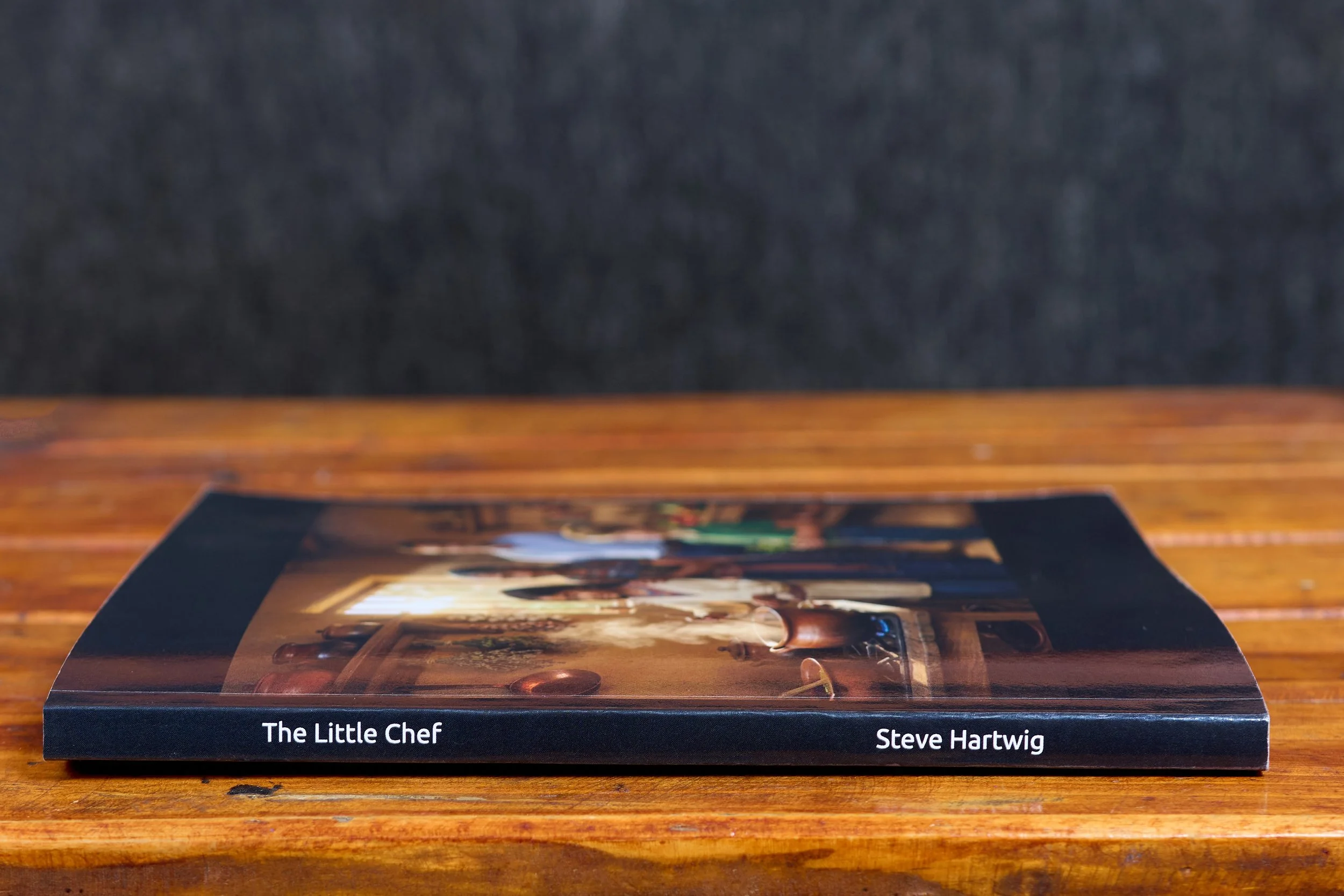
My first completed novel. Finishing The Little Chef answered one question—but it immediately led to another.
Being confident of this very thing, that he which hath begun a good work in you will perform it until the day of Jesus Christ. 📖 Philippians 1:6
Finishing The Little Chef was something I never expected to do.
For years, the manuscript had sat unfinished. Then, during my recovery from a broken leg, I finally completed it and held my first published novel in my hands.
I had answered one question.
"Can I actually finish a novel?"
The answer was yes.
For a while, I simply enjoyed that accomplishment.
Then another question quietly entered my mind.
"Was that my only story?"
I wasn't thinking about becoming a full-time author.
I wasn't making plans for a series of books.
I was simply wondering if God had given me another story to tell.
That question became The Challenge of the Heart.
Writing a second novel was different from writing the first. The fear of never finishing was gone, but now I wanted to know whether the first book had been a one-time accomplishment or the beginning of something more.
Looking back now, I realize God was gently teaching me an important lesson.
Often, He doesn't reveal the whole journey at once.
He simply places the next question in front of us.
When we faithfully answer that question, He reveals the next step.
I couldn't see where that second book would eventually lead.
I certainly never imagined it would bring me to the streets of León, the skateparks, the mountains of Miraflor, or the story of a young boy named Mateo.
But every journey has a second step.
For me, it began with one simple question after I reached the last page.
Sometimes the end of one chapter is simply God's invitation to begin another.
👉 Explore the books here:
https://www.steverhartwigauthor.com/books
Read this post in Spanish here:
https://www.steverhartwigauthor.com/blog-espanol
How Brandy Turned Me Into an Author
This week I begin a new series called "The Stories Behind the Stories."
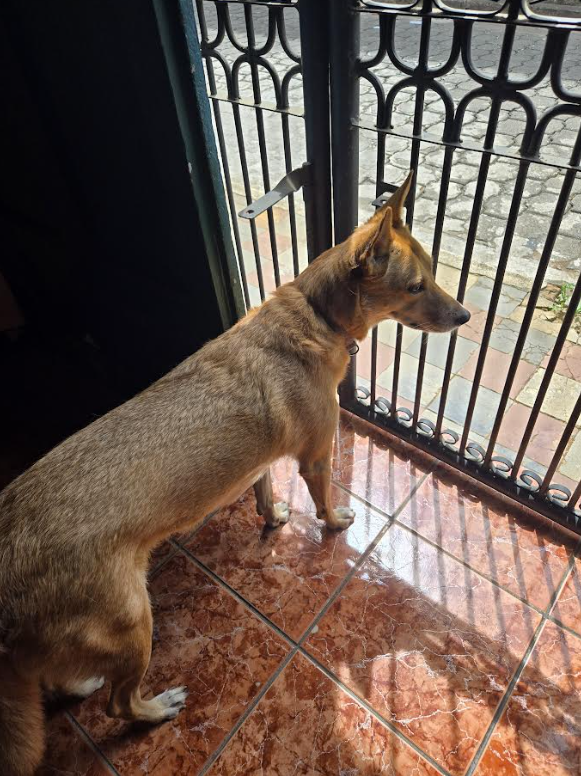
Brandy, the little dog who unknowingly changed the direction of my life. Looking back, I can see that God was already writing a new chapter.
And we know that in all things God works for the good of those who love Him... 📖 Romans 8:28
If someone had told me a few years ago that my dog Brandy would play a part in making me an author, I would have laughed.
But that's exactly where the story begins.
One ordinary day I stood up from my desk without realizing Brandy was lying at my feet.
I tripped over her.
The fall broke my leg.
At the time, it felt like nothing more than a painful accident.
I had no idea that the months ahead would change the direction of my life.
Unable to get around, I suddenly found myself with something I hadn't had in years—time.
There wasn't much I could do physically, but I still needed something to occupy my mind.
That led me back to a story I had started years earlier.
It was called The Little Chef.
The manuscript had become cluttered with too many ideas and had eventually been forgotten.
Now, with nowhere to go and plenty of quiet hours, I opened it again.
At first, I wasn't thinking about becoming an author.
I simply wondered,
"Can I actually finish this?"
Little by little, the story came together.
Eventually, it became my first published novel.
Looking back now, I smile when I think about how it all started.
A dog.
A fall.
A broken leg.
Months I never would have chosen.
Yet God saw something I couldn't.
He was opening a new chapter long before I realized one was beginning.
Sometimes God's greatest blessings arrive disguised as interruptions.
Brandy didn't make me an author.
But God used one unexpected moment involving a faithful little dog to begin a journey I never planned to take.
👉 Explore the books here:
https://www.steverhartwigauthor.com/books
Read this post in Spanish here:
https://www.steverhartwigauthor.com/blog-espanol
GOD OFTEN USES ORDINARY PEOPLE
But God chose the foolish things of the world to shame the wise; God chose the weak things of the world to shame the strong. 📖 1 Corinthians 1:27

Author Steve R. Hartwig with his longtime friend Jazmin overlooking the city of Matagalpa, Nicaragua, where Steve lived during his first seven months in the country. One of God's earliest blessings was the friendships He placed in my life—ordinary people whose kindness helped shape an extraordinary journey.
When we read the Bible, it's easy to focus on the great heroes of faith.
Moses.
David.
Paul.
Yet each of them was an ordinary person before God called them.
The same is true today.
Most of the people who have influenced my life in Nicaragua are not famous.
They are neighbors.
Friends.
Teachers.
Skaters.
Parents.
Business owners.
People simply living their everyday lives.Yet through ordinary conversations, quiet acts of kindness, and faithful friendships, God has used them to shape my journey.
Looking back, I realize that many of the greatest blessings in my life did not come through extraordinary events.
They came through ordinary people who were willing to care.
Perhaps we spend too much time waiting for God to send someone remarkable.
Maybe He has already placed the right people around us.
And perhaps He wants us to become one of those ordinary people in someone else's story.
God has always done extraordinary things through ordinary people who simply make themselves available.
Maybe that is still how He chooses to work today.
👉 Explore the books here:
https://www.steverhartwigauthor.com/books
Read this post in Spanish here:
https://www.steverhartwigauthor.com/blog-espanol
WE NEVER KNOW WHO NEEDS ENCOURAGEMENT
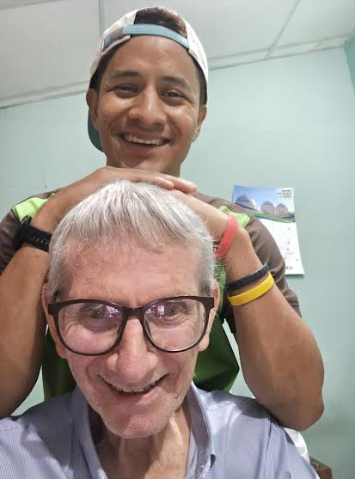
Steve Hartwig and his longtime friend Rolando during Steve's recovery. Sometimes encouragement flows both ways. We never know how God will use a friendship to strengthen both lives.
And let us consider how we may spur one another on toward love and good deeds. 📖 Hebrews 10:24
Encouragement doesn't always come in dramatic moments.
Sometimes it is simply a smile.
A kind word.
A phone call.
Taking time to listen.
Or reminding someone that they matter.
The interesting thing about encouragement is that we rarely know when it is most needed.
A conversation that seems ordinary to us may become unforgettable to someone else.
I have experienced this many times during my years in Nicaragua.
There were days when I thought I was encouraging someone else, only to discover later that they had encouraged me even more.
Friendships have a way of doing that.
When we invest in other people, God often blesses both lives.
We don't always see the results immediately.
Sometimes we never know the difference a small act of kindness has made.
But God knows.
He can use the simplest moments to strengthen someone who was beginning to lose hope.
We don't have to change the whole world.
Sometimes we only need to encourage the person standing right in front of us.
That simple act may become part of a much bigger story than we ever imagined.
👉 Explore the books here:
https://www.steverhartwigauthor.com/books
Read this post in Spanish here:
https://www.steverhartwigauthor.com/blog-espanol