When I finished writing Ride the Fire, I knew what I wanted my next novel to be about.
I wanted to bring the great stories of the Bible to life for young readers.
Not simply by retelling them.
Those stories have been told beautifully for generations.
I wanted readers to experience them.
To stand beside Noah as the ark took shape.
To walk the streets of Babel.
To witness the moments that changed history through the eyes of someone who was there.
But that raised a much bigger question.
Who would tell the story?
Not Noah.
Not Abraham.
Not one of the familiar names every reader already knows.
I needed someone who would discover these events just as today's readers would discover them.
Someone who could ask questions.
Someone who could wonder.
Someone who could laugh, make mistakes, and grow.
Someone young enough that middle-grade readers could see themselves in him.
For a long time, I didn't know who that person was.
I knew the adventures.
I knew the places.
I even knew that the story would unfold in Nicaragua.
But I still hadn't met the boy who would lead readers through it all.
Then, little by little, he began to take shape.
Not all at once.
First came his curiosity.
Then his love of adventure.
Then I began to think about where he lived, the people around him, and the family who would shape his life.
But there was something else.
What would he look like?
If this story was going to be set in Nicaragua, I didn't want Mateo to simply be a generic boy.
I wanted him to look like a boy you might actually meet in a village like Miraflor.
So I began creating images.
One after another.
Some were close.
Some weren't.
Each one helped me understand him a little better.
Then one day, I looked at a new image and stopped.
"That's him."
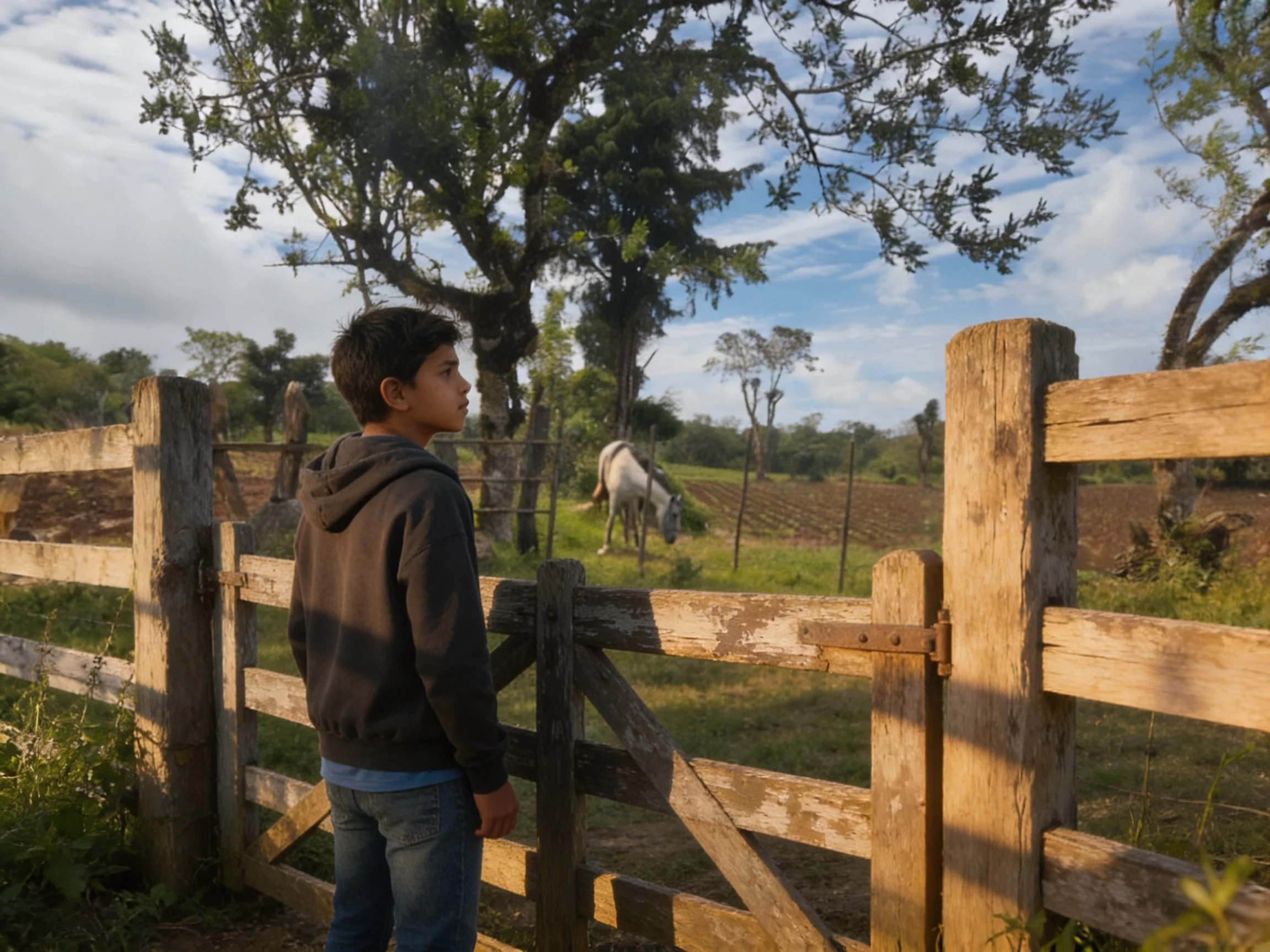
Mateo looks toward the mountains from his family farm.
For the first time, I wasn't looking at a character concept anymore.
I was looking at Mateo.
From that moment on, writing became different.
I could see him walking the mountain trails.
I could picture him standing beside the ancient Bible in the old church.
I could imagine the expressions on his face as he witnessed the great moments of Scripture.
He had finally become real.
Once I knew who Mateo was, the rest of the story began to breathe.
He wasn't there to replace the heroes of Scripture.
He was there to stand quietly beside them.
To see what they saw.
To learn what they learned.
And to invite young readers to discover those same timeless truths with him.
In next week's Behind the Story, I'll introduce you to another very important member of Mateo's world—a wise grandmother named Doña Rosa, whose love, faith, and quiet wisdom help guide a young boy through experiences unlike anything he could have imagined.
