Someone Read It
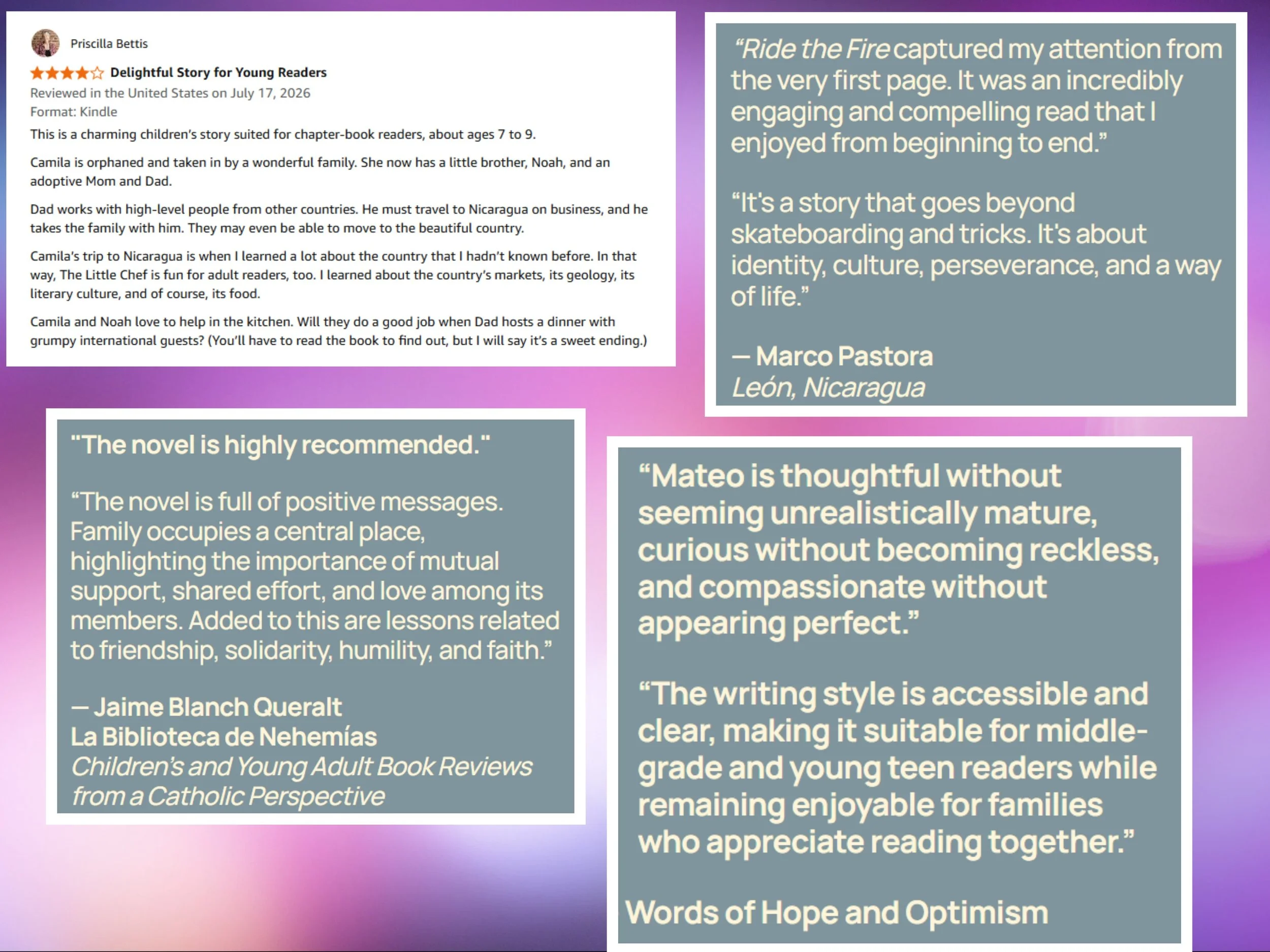
The question every new author asks eventually received an answer. Someone read the stories—and took the time to share what they found in them.
Cast thy bread upon the waters: for thou shalt find it after many days. — Ecclesiastes 11:1 KJV
Last week, I ended with a question every new author eventually has to face.
I wrote the book, but would anyone read it?
There was only one way to find out.
I had to let it go.
That may sound simple.
It wasn't.
Writing a book is a very private experience. For months, the characters belong to you. Their conversations happen inside your head. You decide where they go, what they say, and what happens next.
Then one day, the book is finished.
And suddenly those characters don't belong only to you anymore.
You put the book into someone else's hands.
And wait.
The First Reader
There is something different about having a friend or family member read your book.
You hope they'll like it.
You may even believe them when they tell you they do.
But somewhere in the back of your mind is a little voice saying:
Of course they said that. They know me.
What I really wanted to know was what would happen when someone who didn't know me opened the book.
Someone who had no reason to be kind.
No reason to finish it.
No reason to say anything at all.
Would the story work for them?
Would they care about the characters?
Would they keep turning the pages?
That was the test I couldn't give myself.
The Story Leaves Home
Eventually, it happened.
Someone read the book.
Then someone else did.
A comment appeared.
A review arrived.
Someone I had never met had spent hours with characters who, not so long before, had existed only in my imagination.
That was a strange feeling.
And a wonderful one.
Because they weren't responding to me.
They were responding to the story.
They noticed things.
They cared about characters.
Sometimes they saw something in the story that I hadn't even realized I had put there.
That may have been when I began to understand what happens after a writer finishes a book.
The story leaves home.
Not Everyone Will Love It
Of course, becoming an author also means learning something else.
Not everyone is going to love your book.
Some people won't be interested in it at all.
Some will begin and never finish.
Some may finish and decide it simply wasn't for them.
And that's okay.
A book doesn't have to be for everyone.
It only has to find the readers for whom it is.
That took me a while to understand.
One Reader at a Time
I used to think of readers as numbers.
How many books sold?
How many people visited the website?
How many reviews?
Those numbers still matter. Every author wants people to discover his books.
But I've learned that behind every number is a person.
One person picked up the book.
One person turned the first page.
One person decided to keep reading.
And sometimes, one of those people takes the time to tell you what the story meant to them.
That's when the numbers disappear.
There is simply an author on one side...
and a reader on the other.
Connected by a story.
The Question Changed
So the question I asked last week eventually received an answer.
Would anyone read it?
Yes.
Someone would.
And then another someone.
And another.
I couldn't know where the books would eventually travel, who would discover them, or what would come from any of it.
I still don't.
But perhaps that is part of being an author.
You write the best story you can.
You put it into the world.
And then you wait to see whose hands it finds.
Last week I asked:
Would anyone read it?
This week I had my answer.
Someone did.
And that was enough to make me wonder:
Who might be next?
