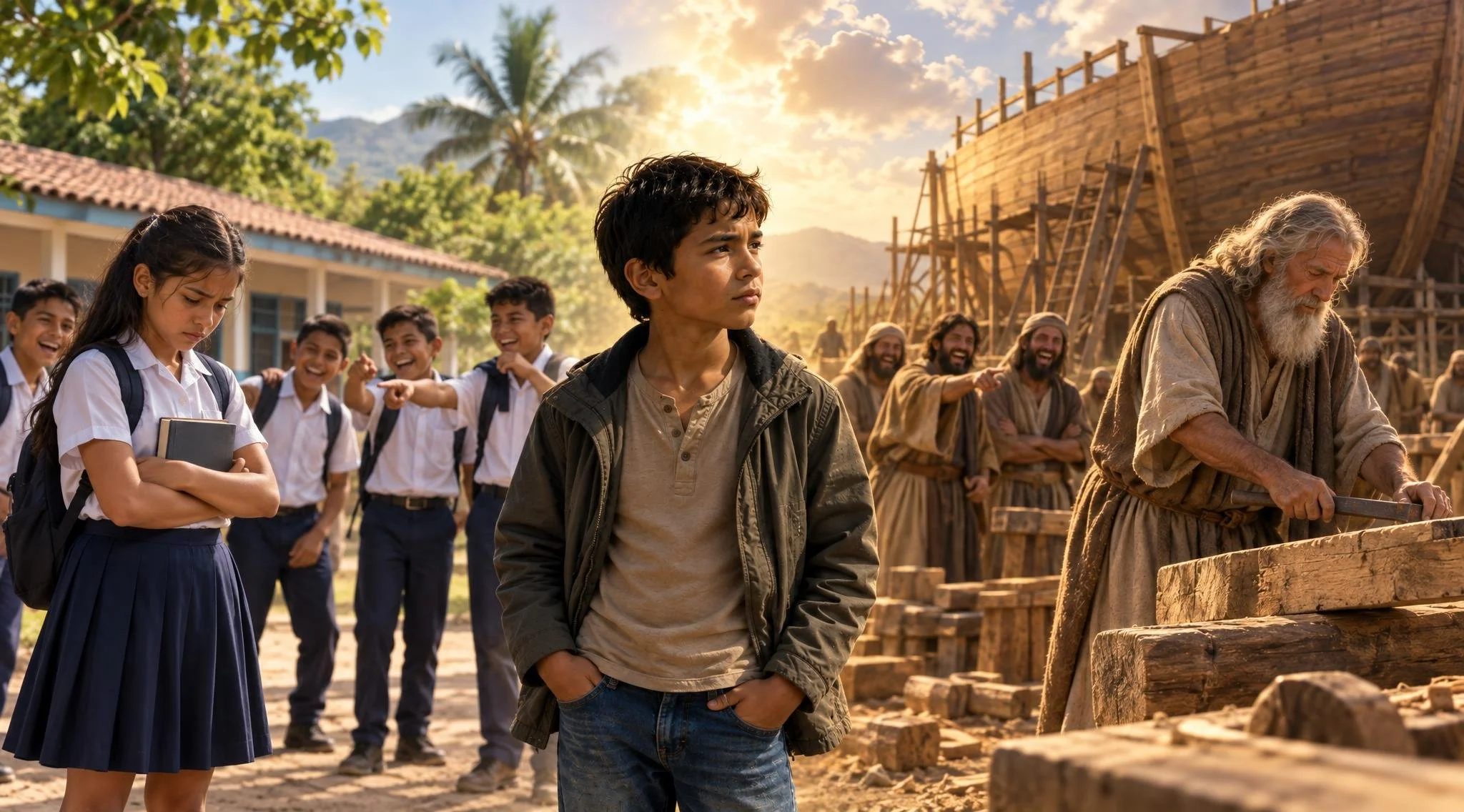
Thousands of years apart, the same lesson: Faith means trusting the truth, even when others laugh.
For whatsoever things were written aforetime were written for our learning, that we through patience and comfort of the scriptures might have hope. Romans 15:4 (KJV)
When I began writing Book One of Mateo and the Secrets of the Eternal Word, I wanted Mateo to experience biblical history rather than simply read about it.
But something happened that I hadn't expected.
As Mateo stepped into the stories of the Bible, I found myself stepping into them with him.
One of the first examples came from the story of Noah.
In the beginning of Book One, Mateo witnesses something that troubles him.
His friend Andrea believes something her papá has told her. She trusts him because he's her father, and she believes he's telling her the truth.
But instead of respecting her faith in her father's words, others respond with disbelief and mockery.
Mateo begins thinking about what happened.
And then, through Verbum, he suddenly finds himself thousands of years in the past, standing among another group of people who are laughing at someone for believing what his Father has told him.
That man is Noah.
God had warned Noah about the coming flood and instructed him to build an enormous ark.
Noah believed Him.
But imagine what that must have looked like to the people living around him.
An old man building an enormous wooden vessel, year after year, because he believed that God had spoken to him.
As I read the account in Genesis, I began wondering what it would have been like to stand there and watch.
What would the neighbors have said?
How would they have reacted as the ark slowly took shape?
Would they have laughed? Shaken their heads? Told Noah he was wasting his life?
Genesis tells us that Noah obeyed God's instructions. It doesn't record all the conversations that might have taken place around the construction of the ark.
That's where imagination entered the story.
Through Mateo, I could stand among those people.
I could hear their imagined conversations, see their expressions, and sense their disbelief.
And I could look beyond them to Noah, continuing his work despite whatever others might have thought.
Suddenly, I wasn't simply reading about Noah.
I was experiencing the scene through Mateo's eyes.
Of course, I wasn't actually there. But writing historical fiction gave me an opportunity to think about the people, their surroundings, and the human emotions behind the events recorded in Scripture.
And something else became clear.
The people laughing at Andrea and the people I imagined laughing at Noah had something in common.
They couldn't understand why someone would believe something they themselves refused to accept.
Andrea trusted her earthly father.
Noah trusted his heavenly Father.
And Mateo was beginning to understand what it means to hold on to the truth even when others make fun of you for believing it.
That was a lesson for Mateo.
But it was also a lesson for me.
I've read the story of Noah many times. I knew about the ark, the animals, the flood, and God's promise.
Yet when I began imagining what life might have been like around Noah during those years of preparation, I started noticing things I hadn't considered before.
The patience his obedience required.
The courage to continue.
And the faith to trust God even when the world around him didn't understand.
Romans 15:4 reminds us that the things written long ago were preserved for our learning and encouragement.
That's something I've come to appreciate even more through writing this series.
The Bible isn't simply a collection of events that happened thousands of years ago.
Its lessons still speak to the situations we face today.
Sometimes we find ourselves in Andrea's position, believing something others question.
Sometimes we need the patience and faith of Noah.
And sometimes, like Mateo, we simply need to stand back, observe, and think about what we're seeing.
I began writing so Mateo could experience the Bible.
I never expected how much I would experience it along with him.
