The One Rule I Gave Mateo
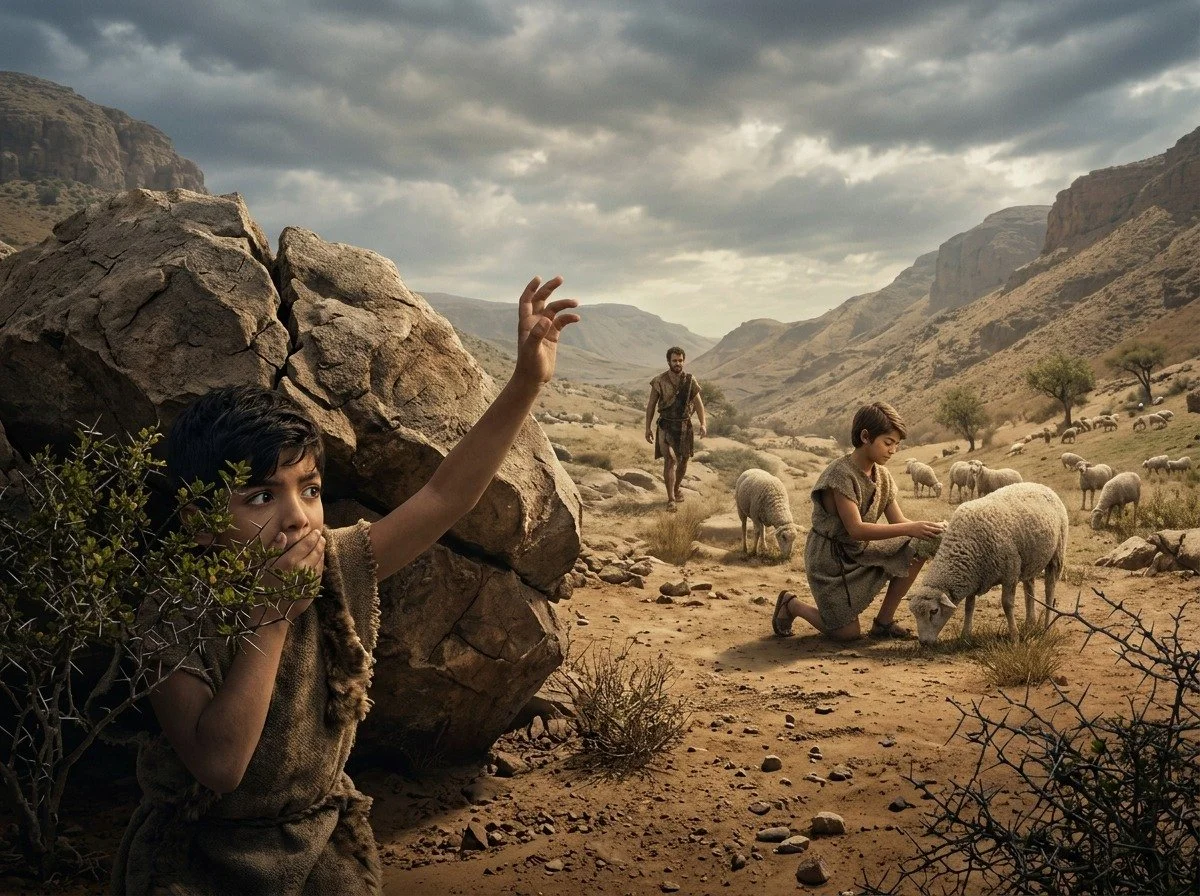
Mateo knows what is about to happen to Abel. But knowing the future and being able to change it are two very different things.
When I decided that Verbum Aeternum could carry Mateo into Bible history, I gave myself a problem.
What if Mateo tried to change it?
It wasn't something I had thought much about when the idea first came to me.
A twelve-year-old boy discovers an enormous ancient Bible. The book comes alive. Suddenly, instead of simply reading the stories of the Bible, Mateo can step inside them.
It sounded like a wonderful adventure.
And then I realized what I had done.
Mateo already knew some of these stories.
He knew what was going to happen.
What if he saw something terrible about to happen?
Could he warn someone?
Could he stop it?
Could a twelve-year-old boy from the mountains of Nicaragua suddenly change a story that happened thousands of years ago?
Obviously, I needed a rule.
Mateo could witness Bible history. But he could not rewrite it.
That rule became especially important when Mateo encountered Cain and Abel.
Imagine knowing the story and then finding yourself standing there.
Abel is tending his sheep.
Cain is approaching.
And you know what is about to happen.
What would you do?
Every instinct would tell you to shout.
Abel! Look out!
Mateo wants to help. He wants to warn him.
But he can't.
For me, that became one of the most interesting parts of writing Mateo and the Secrets of the Eternal Word.
Mateo isn't traveling into Bible history as a superhero.
He isn't there to rescue Noah from the Flood, stop Cain, prevent the Tower of Babel, or give Adam and Eve a helpful warning about a certain serpent.
The stories don't belong to Mateo.
And they don't belong to me.
That distinction matters.
As an author, I can imagine what the Garden of Eden might have looked like. I can imagine the sounds aboard Noah's Ark. I can put Mateo beside people whose names have been familiar to us for thousands of years.
I can imagine the things he might see, hear, think, and feel.
But the biblical events themselves remain the biblical events.
Mateo is there to witness them.
And sometimes that means standing helplessly nearby when he already knows what is going to happen.
There is another reason I like that rule.
It means Mateo doesn't return from his journeys having fixed Bible history.
He returns with questions.
Why did this happen?
Why didn't God stop it?
Why would people make choices like these?
What does any of it have to do with a twelve-year-old boy living thousands of years later in Nicaragua?
Those are the questions he can take back to Father Tomás, Doña Rosa—and eventually to his own heart.
Perhaps that is where Mateo's real adventure lies.
Verbum Aeternum can take him almost anywhere.
It can allow him to witness extraordinary things.
But it cannot give him the power to change what happened.
Mateo's job is not to rewrite the story.
His job is to discover what the story can change in him.
